
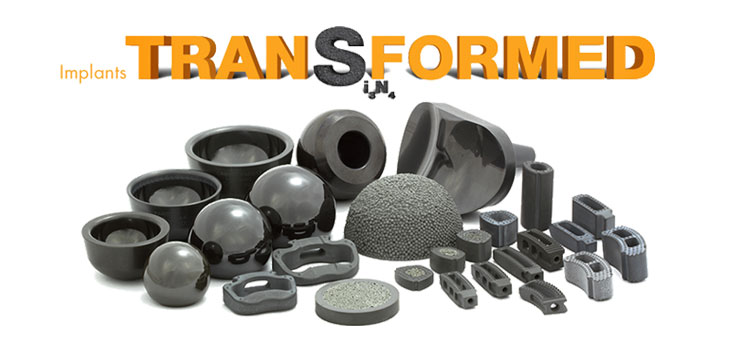
Amedica Corporation has now implanted 10, 000 of its Valeo Interbody Fusion Devices in patients located in ten countries worldwide, according to a company press release. The Valeo Interbody Fusion Device System is made of Amedica’s proprietary Silicon Nitride ceramic technology and is used during surgical procedures to treat spinal disorders such as spondylolisthesis, scoliosis, severe disc degeneration, or spinal fractures.
It’s 10, 000 and Counting at Amedica
2 min read Premium comments
Secondary
Company officials say that because of the device’s record of promoting superior new bone growth and its antibacterial properties, surgeons at leading hospitals worldwide are increasingly relying on it to increase the probability of fusion in their patients. The first time a surgeon used the company’s proprietary silicon nitride implant was in May of 2008, according to a company spokesperson.
“In my four years of experience with Silicon Nitride Interbody Fusion Devices, I’ve seen the material exceed the capabilities of poly-ether-ether-ketone (PEEK) or titanium (Ti), resulting in better fusion, which translates to better results for my patients, ” said Grant Skidmore, M.D., of Neurosurgical Specialists, Inc., in Norfolk, Va. “As a spinal surgeon, my paramount concern is getting my patients back to their daily activities as soon as possible. Patients who I’ve treated with Valeo implants have had a quicker recovery time compared to traditional implants.”
The Valeo Interbody Fusion Device System includes cervical and lumbar implants designed to participate in the fusion process, optimizing patient outcomes. The implants are semi-radiolucent allowing surgeons to ascertain exact placement intra-operatively and improve post-operative monitoring. Amedica representatives say that Valeo Interbody Fusion Devices do not cause MRI or CT artifacts which can make imaging interpretation difficult.
“The success of the Valeo Interbody Fusion Device System is a testament to the proven safety and effectiveness of our Silicon Nitride technology, ” said Eric K. Olson, President and Chief Executive Officer of Amedica. “As we continue to work toward a new standard of care for interbody fusion devices, we are pleased to see a continued increase in physician adoption. We are greatly encouraged for the future of this technology.”
Amedica, located in Salt Lake City, Utah, is a privately held, private equity backed company founded in 1996 by orthopaedic surgeons and ceramicists. The company is ISO 13485 certified and its spine products are both FDA cleared and CE marked.
Author
React:
Discussion
This is a fascinating development. In my practice we've seen similar outcomes with the revised protocol. The key differentiator seems to be patient selection criteria. Has anyone else noticed the correlation with BMI thresholds?
Great point. I'd push back slightly on the conclusion, the sample size in the cited study is too small to draw population-level inferences. That said, the directional signal is compelling and worth a larger RCT.
We implemented a similar approach last year. Early results are promising but we're still gathering 12-month follow-up data. Happy to share our protocol if anyone is interested.
Join the conversation
Orthopedic professionals are discussing this. Sign in and upgrade to read every comment and add your voice.