
Matthias Epple, a professor of inorganic chemistry at the Universitat Duisburg, in Essen, Germany, became fascinated by the interface between biology and medical science—specifically how to create bone. He noted that “the repair of bone defects presents a real challenge for surgeons. When possible they collect the patient’s own bone from various locations, such as the iliac crest, and implant it where needed to fill defects.”
Calcium Phosphate + DNA = Better Bone Paste
1 min read Premium comments
Secondary
Recognizing that there is only a limited amount of surplus bone material in the body, Epple looked to synthetic materials for a solution—settling on calcium phosphate, an inorganic mineral found in bones in the form of nanocrystals. The problem with this solution was that bones repaired with synthetic materials healed more slowly, had a greater risk of infection and had poor mechanical stability.
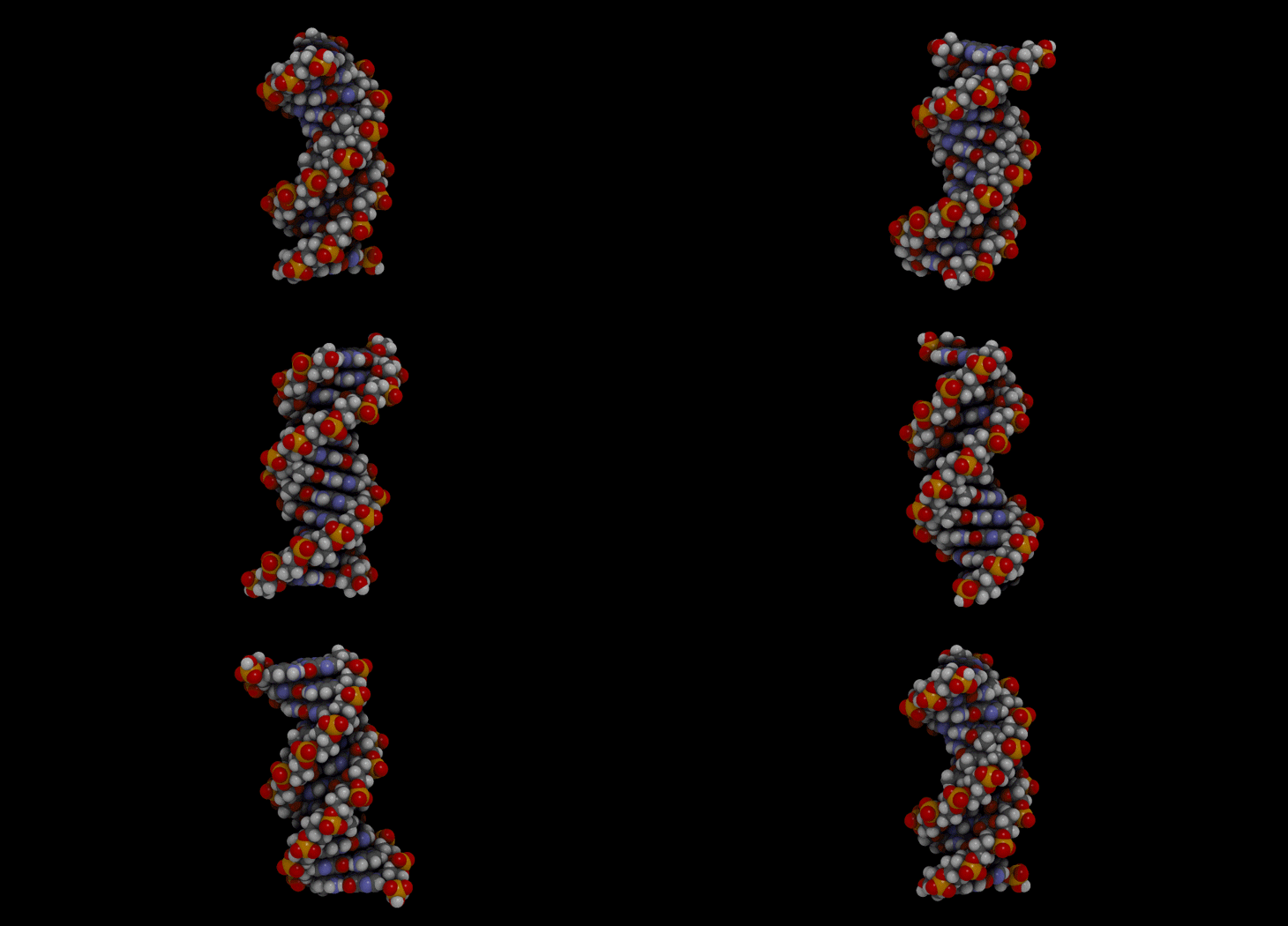
Epple’s team has now created a bone repair paste by coating synthetic nanocrystals of calcium phosphate with nucleic acids—DNA. When this paste is injected into a bone defect, Epple said, “The nanoparticles are taken up by cells. The calcium phosphate dissolves and the DNA that is released stimulates the formation of two proteins important for healing. The proteins are BMP-7, which stimulates bone formation, and VEGF-A, which is responsible for the creation of new blood vessels. As a result, the new bone is supplied with valuable nutrients.”
The researchers expect that the paste will have a long-lasting effect since the nanoparticles are released successively and are continuously stimulating the surrounding cells. They have found that the paste works in three different cell types. Epple and his co-researchers hope that “our development will be used several years from now in the field of traumatology and in the treatment of osteoporosis.”
The research was published in the online publication RSC Advance.
Author
React:
Discussion
This is a fascinating development. In my practice we've seen similar outcomes with the revised protocol. The key differentiator seems to be patient selection criteria. Has anyone else noticed the correlation with BMI thresholds?
Great point. I'd push back slightly on the conclusion, the sample size in the cited study is too small to draw population-level inferences. That said, the directional signal is compelling and worth a larger RCT.
We implemented a similar approach last year. Early results are promising but we're still gathering 12-month follow-up data. Happy to share our protocol if anyone is interested.
Join the conversation
Orthopedic professionals are discussing this. Sign in and upgrade to read every comment and add your voice.