
Zyga Technology, Inc. has completed enrollment in the Glissade trial to demonstrate performance of facet resurfacing.
Zyga Completes Glyder Trial Enrollment in Europe
2 min read Premium comments
Secondary
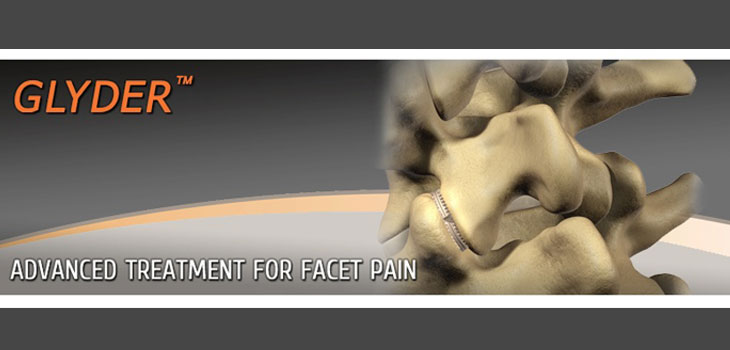
“For patients suffering from chronic facet pain, there has never been a viable procedure providing long term relief, ” said Professor Dr. Hans Jorg Meisel, M.D., director of the Center of Neurosciences of the BG-Clinic Bergmannstrost Halle, Germany and principal investigator for the study. “Their options were to receive injections several times each year or to undergo a more aggressive, permanent spine fusion procedure. The Glyder system offers simple, minimally invasive implantation of a device designed to preserve the patient’s anatomy and to provide long-term pain relief. Our initial patients are now reaching two years post-surgery, and we are very encouraged to see that they are experiencing sustainable pain relief.”
When the study began in August 2011, Dr. Meisel noted the Glyder was very easy to implant into the facet joints. Brazilian spine surgeon, Luiz Pimenta, M.D., medical director, Instituto de Patologia da Coluna, Sao Paulo, Brazil, the first surgeon to implant the device said, “Early results (in 2011) suggest that Glyder could be a good option for treating patients suffering from facet pain, ” and was looking forward to results from the European study.
Clinical and Economic Value
The preliminary results, “suggests the Glyder system’s clinical and economic value, ” said company President and CEO Jim Bullock on January 31, 2013.
Over 31 million people in the U.S. suffer from chronic low back pain. Approximately 31% of that chronic back pain is attributable to the face joints, according to the Centers for Disease Control.
A company statement says the prospective, 40-patient trial is studying the Glyder Facet Resurfacing System in the treatment of chronic facetogenic pain. Preliminary data analyses from this five-site trial indicate a significant reduction in pain and improvement in function as measured by Visual Analogue Pain Scale (VAS) and Oswestry Disability Index (ODI). The results of this trial will serve as the foundation for future investigation including the DUET Clinical Trial in Europe and the U.K., and mid-2013 submission for an Investigational Device Exemption (IDE) Study to the U.S. Food and Drug Administration (FDA). The company anticipates CE Marking approval in late 2013.
Zyga Technology, headquartered in Minneapolis, is currently marketing the Simmetry Sacroiliac Joint Fusion System, a minimally invasive procedure intended for conditions including sacroiliac joint disruptions and degenerative sacroiliitis.
Author
React:
Discussion
This is a fascinating development. In my practice we've seen similar outcomes with the revised protocol. The key differentiator seems to be patient selection criteria. Has anyone else noticed the correlation with BMI thresholds?
Great point. I'd push back slightly on the conclusion, the sample size in the cited study is too small to draw population-level inferences. That said, the directional signal is compelling and worth a larger RCT.
We implemented a similar approach last year. Early results are promising but we're still gathering 12-month follow-up data. Happy to share our protocol if anyone is interested.
Join the conversation
Orthopedic professionals are discussing this. Sign in and upgrade to read every comment and add your voice.