
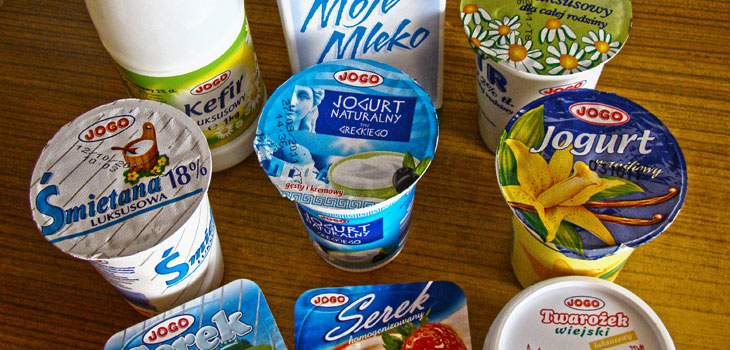
Aching hip? Try milk or yogurt. (But that won’t help your spine.) New findings from the Institute for Aging Research (IFAR) at Hebrew SeniorLife, an affiliate of Harvard Medical School, show that dairy—specifically milk and yogurt—is associated with higher bone mineral density (BMD) in the hip, but not the spine. Their “cousin, ” cream, may be associated with lower BMD overall. The authors indicate that these findings suggest that not all dairy products are equally beneficial in promoting bone strength.
Dairy Varies in Promoting Bone Strength
1 min read Premium comments
Secondary
“Dairy foods provide several important nutrients that are beneficial for bone health, ” says lead author Shivani Sahni, Ph.D., Musculoskeletal Research Team, IFAR, in the February 1, 2013 news release. “However, cream and its products such as ice cream have lower levels of these nutrients and have higher levels of fat and sugar. In this study, 2.5 to 3 servings of milk and yogurt intake per day were associated with better bone density. More research is needed to examine the role of cheese intake (some of which can be high in fat and sodium), and whether individual dairy foods have a significant impact in reducing fractures.”
IFAR researchers utilized data collected from a food frequency questionnaire completed by 3, 212 participants from the Framingham Offspring study. They then compared participants’ dairy intake with BMD measurement, which revealed the benefits of milk and yogurt versus cream in largely middle-aged men and women. According to the study, nutrient composition varies among dairy foods. Choosing low-fat milk or yogurt over cream can increase intake of protein, calcium and vitamin D while limiting intake of saturated fats.
React:
Discussion
This is a fascinating development. In my practice we've seen similar outcomes with the revised protocol. The key differentiator seems to be patient selection criteria. Has anyone else noticed the correlation with BMI thresholds?
Great point. I'd push back slightly on the conclusion, the sample size in the cited study is too small to draw population-level inferences. That said, the directional signal is compelling and worth a larger RCT.
We implemented a similar approach last year. Early results are promising but we're still gathering 12-month follow-up data. Happy to share our protocol if anyone is interested.
Join the conversation
Orthopedic professionals are discussing this. Sign in and upgrade to read every comment and add your voice.