
A team of Yale researchers has published a review article indicating that female athletes are three times more likely than their male counterparts to suffer from anterior cruciate ligament (ACL) ruptures. The article, which appears in the January 2013 issue of the Journal of the American Academy of Orthopaedic Surgeons (JAAOS), discusses recent research focusing on the unique anatomical differences in the female knee that may contribute to higher injury rates.
Women 3X More Likely to Rupture ACL
1 min read Premium comments
Secondary
“As female athletes have increased their participation in sports, many studies have shown the vulnerability of female athletes to ACL ruptures, ” said Karen Sutton, M.D., in the January 8, 2013 news release. Dr. Sutton is assistant professor at Yale University Department of Orthopaedics and Rehabilitation, and is lead author of the article. “This devastating injury has a long recovery period and a slow return to sport. Thus, research has been done focusing on why women are more vulnerable to ACL injuries and how to prevent them.”
A slew of research studies have found that preseason and ongoing neuromuscular training programs as part of an overall sports training program aimed specifically at improving knee stability when jumping, landing or pivoting can significantly decrease ACL injury risk among girls and women. Unique anatomical features of female athletes such as a larger quadriceps angle (“Q angle”)—the angle at which the femur meets the tibia—may cause a greater pull of the knee muscles during physical activity, and contribute to more ACL injuries among females.
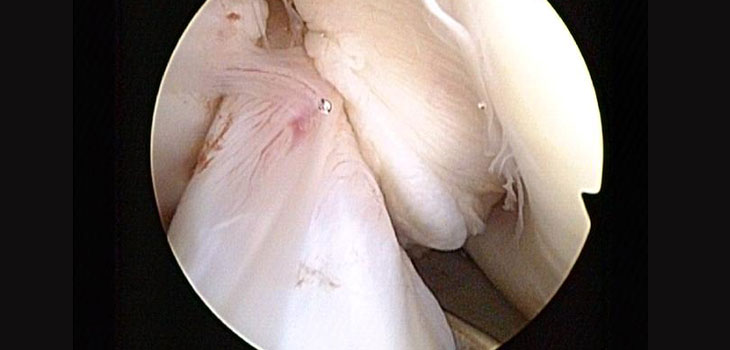
Anatomical differences in the female knee should be taken into consideration during ACL reconstruction, said Dr. Sutton. Females are more likely than males to have a smaller, A-shaped intercondylar notch, making ACL reconstruction more challenging, and possibly requiring altered surgical techniques.
“All female athletes, starting in adolescence, should learn appropriate training techniques, ” said Dr. Sutton. “This includes the appropriate way to land from a jump, increasing the strength of muscles that could have a protective affect on the ACL—core, gluteal, quadriceps and hamstring muscles, as well as working on the body’s reaction to change of direction and change of speed.”
React:
Discussion
This is a fascinating development. In my practice we've seen similar outcomes with the revised protocol. The key differentiator seems to be patient selection criteria. Has anyone else noticed the correlation with BMI thresholds?
Great point. I'd push back slightly on the conclusion, the sample size in the cited study is too small to draw population-level inferences. That said, the directional signal is compelling and worth a larger RCT.
We implemented a similar approach last year. Early results are promising but we're still gathering 12-month follow-up data. Happy to share our protocol if anyone is interested.
Join the conversation
Orthopedic professionals are discussing this. Sign in and upgrade to read every comment and add your voice.