
Scott Bruder, M.D., Ph.D. has been a professor of biomedical engineering, an FDA Advisory Panel member, chief science and technology officer and a seasoned science executive with Becton, Dickinson and Company, DePuy, Inc., Anika Therapeutics, Inc. and Osiris Therapeutics, Inc.
Stryker Creates Chief Scientist Position, Hires Bruder
2 min read Premium comments
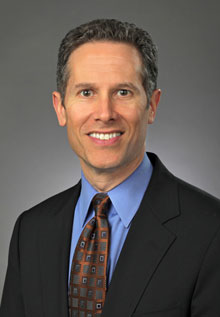
The new leaders at Stryker Corporation took notice and convinced Bruder to fill a new position at the company, Vice President, Chief Medical and Scientific Officer.
The company announced the appointment on January 7, 2013.
Kevin Lobo, Stryker’s relatively new president and CEO, said Bruder’s addition to the executive leadership team will “further broaden our clinical and scientific expertise while also strengthening our capabilities in the critical areas of evidence-based medicine.”
In this role, Bruder will oversee the company’s clinical and scientific efforts, including academic, industrial and governmental scientific partnerships. In addition, according to the company announcement, he will represent Stryker as the leading medical authority of the company for trade associations, regulatory bodies, and other entities while also partnering with teams across the organization.
The company announcement states that Bruder has a long and distinguished track record of performance with more than 20 issued and pending patents, nearly 150 publications and numerous honors from the American Academy of Orthopaedic Surgeons, the Orthopaedic Research Society and the Association of Bone and Joint Surgeons.
For the past five years, Bruder worked at Becton, Dickinson and Company as the chief science and technology officer, where he was responsible for identifying and cultivating new growth opportunities, improving the product development system and enhancing global research capabilities. Prior to that, he spent eight years at Johnson & Johnson in a series of senior executive and scientific roles in various businesses.
He is a graduate from Brown University and Case Western Reserve University (CWRU) School of Medicine, where he also earned a Ph.D. in stem cell biology, before obtaining additional surgical training at the University of Pennsylvania. He maintains an active academic presence as an adjunct professor of biomedical engineering at CWRU, having previously been an adjunct faculty member in the department of orthopaedic surgery for 13 years.
With a solid mix of biologic and surgical knowledge, Bruder appears to be a good addition for a leading company in an industry that’s moving from being a joint replacement business to a joint preservation business.
Author
React:
Discussion
This is a fascinating development. In my practice we've seen similar outcomes with the revised protocol. The key differentiator seems to be patient selection criteria. Has anyone else noticed the correlation with BMI thresholds?
Great point. I'd push back slightly on the conclusion, the sample size in the cited study is too small to draw population-level inferences. That said, the directional signal is compelling and worth a larger RCT.
We implemented a similar approach last year. Early results are promising but we're still gathering 12-month follow-up data. Happy to share our protocol if anyone is interested.
Join the conversation
Orthopedic professionals are discussing this. Sign in and upgrade to read every comment and add your voice.