
Could dead bodies be a source for viable stem cells? As Jessica Hamzelou wrote in the December 2012 issue of New Scientist Health, human bone marrow contains mesenchymal stem cells (MSC), which can develop into bone, cartilage, fat and other cell types. They can also be transplanted and tend not to be rejected by the recipients’ immune system. The problem faced by doctors is that stem cell therapies require a huge numbers of cells and it can be difficult to obtain a sufficient amount from a living donor. Could stem cells taken from cadavers be the answer?
Stem Cells From Cadavers Are Viable
2 min read Premium comments
Secondary
Most stem cells in the body die within a couple of days after death. Gianluca D’Ippolito and his colleagues at the University of Miami, Florida, wondered whether stem cells from bone marrow, which live in an environment that is low in oxygen, might survive longer than the others.
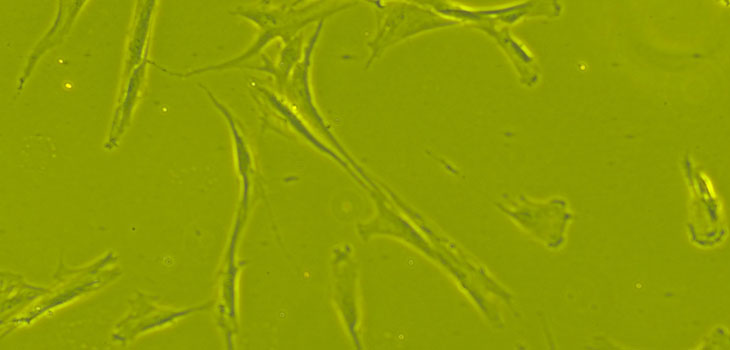
To find out, D’Ippolito’s team kept the finger bones of two cadavers for five days before removing the MSCs from the bone marrow and putting it in a dish to see if the cells would grow. They did. After five weeks D’Ippolito was able to transform the stem cells from the cadaver finger bones into cartilage, cells that form bone, and fat cells. He presented the results of his work at the December 2012 World Stem Cell Summit in West Palm Beach, Florida.
D’Ippolito notes that only limited amounts of bone marrow can be taken from a living donor, but a cadaver represents a plentiful source of cells. “From one donor, you could take the whole spine, for example. You are going to end up with billions of cells, ” he said.
Hamzelou quotes Paolo Macchiarini, who researches regenerative medicine at the Karolinska Institute in Stockholm, Sweden, warning that the cells from cadavers may not be as healthy as they seem. He suggests that the cell’s DNA may be affected by the death of surrounding tissue and exposure to cold temperatures. “We need to make sure the cells are safe, ” he says.
Chris Mason at University College London sees a problem in using such MSCs in therapy. “The work is novel and intriguing…but it would be better to use a living donor, ” he said. He notes that medical regulators oppose treating individuals with stem cells from more than one source. “You can always go back and get more stem cells from a living donor if you need them, but if you use a cadaver, you’ll eventually run out, ” he said.
Author
React:
Discussion
This is a fascinating development. In my practice we've seen similar outcomes with the revised protocol. The key differentiator seems to be patient selection criteria. Has anyone else noticed the correlation with BMI thresholds?
Great point. I'd push back slightly on the conclusion, the sample size in the cited study is too small to draw population-level inferences. That said, the directional signal is compelling and worth a larger RCT.
We implemented a similar approach last year. Early results are promising but we're still gathering 12-month follow-up data. Happy to share our protocol if anyone is interested.
Join the conversation
Orthopedic professionals are discussing this. Sign in and upgrade to read every comment and add your voice.