
Six new doctors are settling into the Mount Sinai School of Medicine’s Department of Orthopaedics in New York City. The physicians, including surgeons and physiatrists, come to Mount Sinai from Beth Israel Medical Center.
Six Doctors Join Mount Sinai
2 min read Premium comments
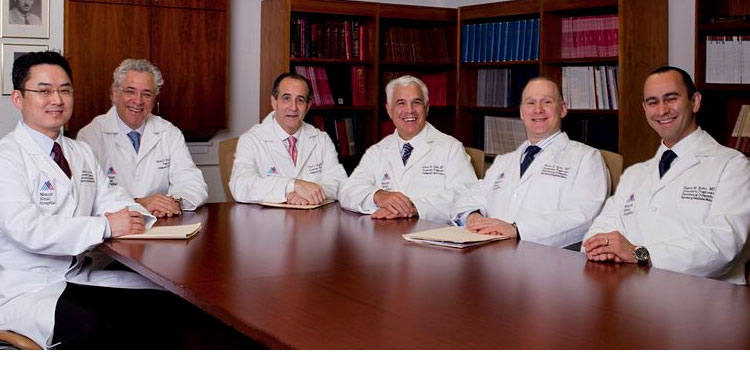
The new doctors joining Mount Sinai are (in no particular order):
- Dr. Andrew Casden, formerly Associate Director of the Spine Institute at Beth Israel Medical Center, is now Associate Professor in the Department of Orthopaedics at the Icahn School of Medicine at Mount Sinai. Dr. Casden specializes in minimally invasive spinal surgery for herniated discs, spinal stenosis and spinal fusion. He has also has extensive experience in spinal deformity surgery.
- Dr. Alexander Lee, formerly Attending Physician in the Department of Orthopaedics and the Department of Rehabilitation Medicine at Beth Israel Medical Center specializing in interventional physiatry, is now Assistant Professor in the Department of Orthopaedics and the Department of Rehabilitation Medicine at the Icahn School of Medicine at Mount Sinai. Dr. Lee specializes in interventional physiatry: non-surgical treatment of all spine conditions with expertise in radiofrequency neurotomy for neck and low back pain.
- Dr. Eugene Bulkin, formerly Attending Physician in the Department of Orthopaedics and the Department of Rehabilitation Medicine at Beth Israel Medical Center, is now Assistant Professor in the Department of Orthopaedics and the Department of Rehabilitation Medicine at the Icahn School of Medicine at Mount Sinai. Dr. Bulkin specializes in non-surgical interventions for treatment of spine conditions.
- Dr. Paul Kuflik, formerly Associate Director of the Spine Institute at Beth Israel Medical Center, is now Associate Professor in the Department of Orthopaedics at the Icahn School of Medicine at Mount Sinai. Dr. Kuflik specializes in disorders of the spine with expertise in minimally invasive spine surgery for herniated discs, spinal stenosis, cervical spine disease, spine fusions and spinal deformity.
- Dr. Michael Neuwirth, formerly Director of the Spine Institute at Beth Israel Medical Center, is now Professor in the Department of Orthopaedics at the Icahn School of Medicine at Mount Sinai. Dr. Neuwirth specializes in complex spinal deformities, cervical spine and lumbar spine issues.
- Dr. Stuart Kahn, formerly Director of Spine Pain and Rehabilitation Medicine at Beth Israel Medical Center, is now Associate Professor in the Department of Orthopaedics and the Department of Rehabilitation Medicine at the Icahn School of Medicine at Mount Sinai. Dr. Kahn is both a board-certified physiatrist and board-certified pain management specialist. Dr. Kahn treats acute and chronic pain in patients with spine conditions, specializing in interventional pain.
Dr. Evan Flatow, chair of the Department of Orthopaedics at the Mount Sinai School of Medicine, said in the January 8, 2013 news release, “These renowned surgeons and physiatrists join our existing team of spine specialists to further build our outstanding program of comprehensive operative and non-operative care for patients suffering from spinal disorders. This addition will further cement Mount Sinai’s position as the premier center for spine care in the New York region.”
Dr. Andrew Hecht, co-director of spine surgery and Director of the Orthopaedic Spine Center at Mount Sinai School of Medicine, said, “We are thrilled to add three superb surgeons to our team as well as three highly skilled physiatrists. Together we will continue to build a spine center of excellence and further our exceptional clinical and research programs.”
React:
Discussion
This is a fascinating development. In my practice we've seen similar outcomes with the revised protocol. The key differentiator seems to be patient selection criteria. Has anyone else noticed the correlation with BMI thresholds?
Great point. I'd push back slightly on the conclusion, the sample size in the cited study is too small to draw population-level inferences. That said, the directional signal is compelling and worth a larger RCT.
We implemented a similar approach last year. Early results are promising but we're still gathering 12-month follow-up data. Happy to share our protocol if anyone is interested.
Join the conversation
Orthopedic professionals are discussing this. Sign in and upgrade to read every comment and add your voice.