
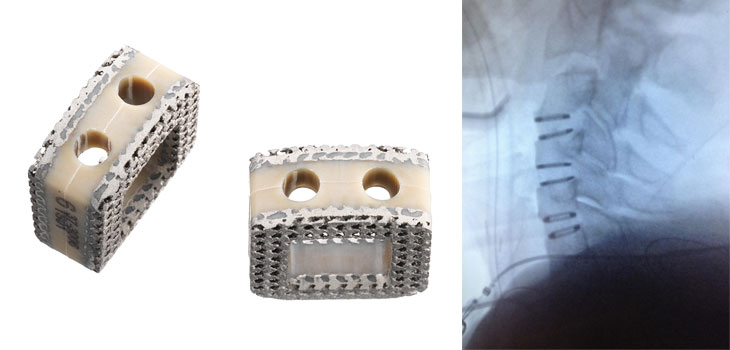
Orthofix International N.V. has launched an anterior cervical interbody system that incorporates the benefits of PEEK imaging capabilities with potential of bone ingrowth from porous titanium endplates.
Orthofix Launches Hybrid PEEK/Titanium Spacer
1 min read Premium comments
Secondary
The company announced the new system called the Construx Mini PEEK Titanium Composite (PTC) Spacer System on January 9, 2013. The system will be distributed through the company’s spine distribution network.
According to the company, the PTC system has porous titanium endplates that provide a 3D porous material with the potential for bone ingrowth that may create a bond between the bone and the implant. The implant also features a PEEK core, which allows for post and intraoperative imaging without the severe image distortion associated with metal designs currently on the market.
“This PEEK/ Titanium hybrid, ” said the company statement, “offers three footprints and various heights to address the cervical interbody fusion solution. These implants work with the Construx Mini PEEK Spacer System instrument trays currently in the field.”
Scott Stanley, M.D., medical director of the Spine Program at Parker Adventist Hospital in Parker, Colorado, and primary surgeon innovator behind the technology stated, “After years of hard work in this product’s development, I am thrilled to utilize this implant for my patients. I believe that the porous interface will allow for potential bone ingrowth as demonstrated in the orthopedic joint arthroplasty literature. This product will allow patients to return to extracurricular activities and activities of daily living in a timely fashion.”
Orthofix’s President and CEO Bob Vaters said the launch of the system represents the beginning of a series of product launches in 2013 that will, “bring our cervical implant product offerings to the forefront of the industry.”
Author
React:
Discussion
This is a fascinating development. In my practice we've seen similar outcomes with the revised protocol. The key differentiator seems to be patient selection criteria. Has anyone else noticed the correlation with BMI thresholds?
Great point. I'd push back slightly on the conclusion, the sample size in the cited study is too small to draw population-level inferences. That said, the directional signal is compelling and worth a larger RCT.
We implemented a similar approach last year. Early results are promising but we're still gathering 12-month follow-up data. Happy to share our protocol if anyone is interested.
Join the conversation
Orthopedic professionals are discussing this. Sign in and upgrade to read every comment and add your voice.