
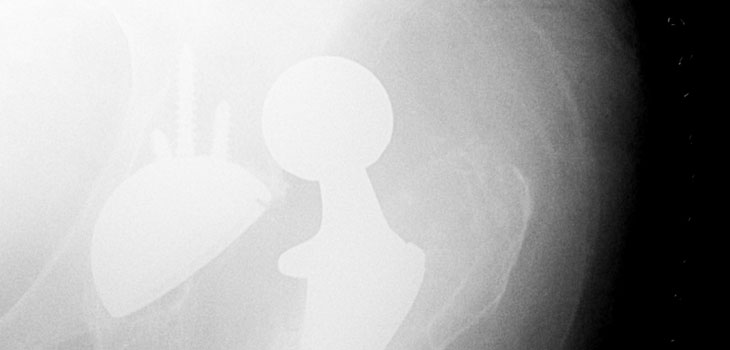
Which patients are most at risk for having to have a hip replacement procedure? A study conducted at Brigham and Women’s Hospital and the Harvard Medical School found that “younger, taller and heavier patients, and those receiving a cemented femoral component, had greater likelihood of undergoing a revision total hip replacement over a 12-year follow-up period.”
Hip Revision Risk Factors Identified
1 min read Premium comments
Secondary
Researchers examined data on patients who had a hip replaced between July 1995 and June 1996, each of whom was matched with a control patient. They looked at 719 pairs of patients, as well as their hospital records, in order to observe any potential risk factors. They found that patients who were aged 75 or under at the time of their initial surgery were more likely to need revision surgery than those who were older. Taller patients were also more likely to need revision surgery, as were those with a high body weight.
Investigators published their findings, believed to be the first such U.S. study to look for risk factors for hip replacement revision surgery, in the journal Arthritis Care & Research. They recommended that, “Effects of age and body size on revision risk should be addressed by clinicians with patients considering primary total hip replacement.”
Author
React:
Discussion
This is a fascinating development. In my practice we've seen similar outcomes with the revised protocol. The key differentiator seems to be patient selection criteria. Has anyone else noticed the correlation with BMI thresholds?
Great point. I'd push back slightly on the conclusion, the sample size in the cited study is too small to draw population-level inferences. That said, the directional signal is compelling and worth a larger RCT.
We implemented a similar approach last year. Early results are promising but we're still gathering 12-month follow-up data. Happy to share our protocol if anyone is interested.
Join the conversation
Orthopedic professionals are discussing this. Sign in and upgrade to read every comment and add your voice.