
Soft Tissue Regeneration Inc., (STR) of New Haven, Connecticut, is chasing one of the Holy Grails of orthopedics, repair of musculoskeletal soft tissue injuries.
FDA Clearance for STR’s Rotator Cuff Repair Scaffold
2 min read Premium comments
Secondary
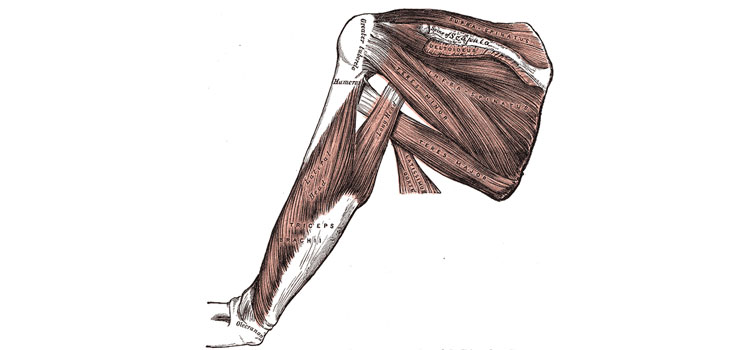
On January 3, 2013, the company announced FDA clearance to market its STR Graft, a biodegradable scaffold used for, “soft tissue augmentation and rotator cuff repair.”
The STR Graft, according to the announcement, is a three-dimensional braided engineered matrix that, Cato Laurencin, M.D., Ph.D. and inventor, likens to a patch. During surgery, surgeons can drape this biodegradable patch over the tendon that sits on the shoulder bone, anchoring it with sutures to keep it in place while the tendon, bones and nearby tissues heal. Unlike currently available devices, which are made of weaker cadaver or animal tissue that can cause sutures to pull, the company believes the STR Graft is thinner—about 1 millimeter—and stronger, which lessens pain, speeds recovery time and drastically reduces surgical failure rates.
According to the American Academy of Orthopaedic Surgeons (AAOS), in 2008, close to 2 million people in the U.S. saw their doctor because of a rotator cuff problem. But surgeries aren’t always successful. According to Laurencin, depending on the size of the tear, the degree of muscle atrophy, the quality of the tendon and the post-op rehabilitation protocol, repeat surgeries are necessary 20% to 70% of the time. “There are several products available to augment rotator cuff repair, but they suffer from strength, suture pull-through and surgical deployment issues, all of which the STR Graft addresses, ” said Laurencin.
STR was established, according to the company, to “develop a breakthrough technology for soft tissue regeneration of the anterior cruciate ligament (ACL) of the knee. The company’s patented, proprietary technology uses an FDA-approved polymer, already widely used in biomedical devices, that allows STR to address a tremendous unmet need in the repair of musculoskeletal soft tissue injuries.”
In 2012, National Geographic named regenerative medicine as one of the “Top 100 Scientific Discoveries That Changed the World, ” highlighting STR’s technology to regenerate the ACL. In addition to its new rotator cuff repair device, the company is developing a surgical mesh and hernia repair mesh product line. The company has successfully raised a series A of $4 million, and is currently raising a $10 million series B. Connecticut Innovations is an investor and advisor.
STR’s Scientific Advisory Board includes Clarence Shields, Jr., M.D., James Andrews, M.D., Robert Stanton, M.D., Robert S. Langer, Sc.D., Kenneth R. Alleyne, M.D. and David Anderson. Drs. Shields, Andrews and Stanton are all former presidents or executive board members of the American Orthopaedic Society for Sports Medicine (AOSSM).
Author
React:
Discussion
This is a fascinating development. In my practice we've seen similar outcomes with the revised protocol. The key differentiator seems to be patient selection criteria. Has anyone else noticed the correlation with BMI thresholds?
Great point. I'd push back slightly on the conclusion, the sample size in the cited study is too small to draw population-level inferences. That said, the directional signal is compelling and worth a larger RCT.
We implemented a similar approach last year. Early results are promising but we're still gathering 12-month follow-up data. Happy to share our protocol if anyone is interested.
Join the conversation
Orthopedic professionals are discussing this. Sign in and upgrade to read every comment and add your voice.