
While it is far too early to celebrate, we should note that researchers at the California Institute of Regenerative Medicine are part of a group that has found that transplanted neural stem cells slow the progress of a form of Lou Gehrig’s disease (amyotrophic lateral sclerosis or ALS) in mice. Though encouraging, because ALS has no cure, reporters are quick to point out that what works in mice may not work in humans. The study is published in Science Translational Medicine.
Stem Cells Benefit ALS Mice
1 min read Premium comments
Secondary
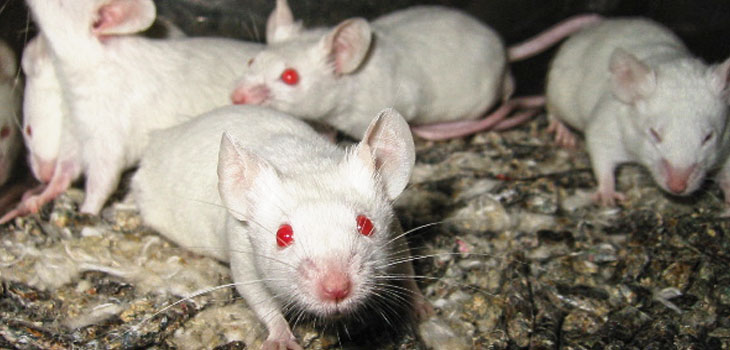
Researchers at multiple institutions conducted 11 independent studies to test neural stem cell transplantation in a well-established mouse model of ALS. All of them found that this cell therapy reduced the symptoms and course of the ALS-like disease. The treated mice had improved motor performance and respiratory function. The neural stem cell transplant also slowed the disease’s progression. Twenty-five percent of the treated ALS mice in this study survived for one year or more which is roughly three to four times longer than the untreated mice lived.
A major understanding that came from the study was how the neural cells worked. They did not turn into nerve cells that could replace those damaged or missing in the spinal cords of the ALS mice. Instead the cells appeared to produce protective molecules. They also triggered host cells to produce their own protective molecules. These factors helped spare host nerve cells from further destruction.
Author
React:
Discussion
This is a fascinating development. In my practice we've seen similar outcomes with the revised protocol. The key differentiator seems to be patient selection criteria. Has anyone else noticed the correlation with BMI thresholds?
Great point. I'd push back slightly on the conclusion, the sample size in the cited study is too small to draw population-level inferences. That said, the directional signal is compelling and worth a larger RCT.
We implemented a similar approach last year. Early results are promising but we're still gathering 12-month follow-up data. Happy to share our protocol if anyone is interested.
Join the conversation
Orthopedic professionals are discussing this. Sign in and upgrade to read every comment and add your voice.