
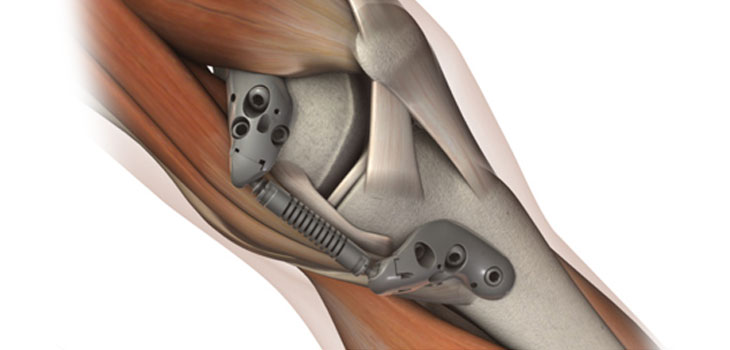
Early intervention for OA…Moximed, Inc. has announced that its KineSpring System, an implantable medical spring that works by unloading the weight on the diseased knee joint, has been successfully implanted in the first patient enrolled in its U.S. clinical study, SOAR. The objectives of the study are to evaluate the safety and effectiveness of the KineSpring System for the treatment of knee osteoarthritis (OA) in a U.S. patient group.
Moximed Implants First KineSpring System
1 min read Premium comments
Secondary
This prospective, single-arm clinical study of the KineSpring System in patients with medial compartment knee osteoarthritis will enroll a total of 30 patients at six U.S. orthopedic centers. The study’s Lead Principal Investigator is Jack Farr, M.D., director of the OrthoIndy Cartilage Restoration Center of Indiana and the OrthoIndy Sports Medicine Fellowship Program.
“Previous clinical experience with the KineSpring System in Europe and Australia has shown favorable results, ” noted Principal Investigator Dennis C. Crawford, M.D., Ph.D. in the December 11, 2012 news release. Dr. Crawford is associate professor of Orthopedic Surgery and Director of Sports Medicine at Oregon Health & Science University in Portland, Oregon, who performed the first procedure in the United States in December 2012. “My Co-investigators and I are encouraged by this experience and believe the KineSpring System could prove to be an effective treatment option in active individuals, with early knee osteoarthritis, who are interested in a procedure that is less invasive than joint replacement surgery.”
“The start of the SOAR clinical trial with the KineSpring System is a significant milestone for Moximed. The KineSpring System is already commercialized in the major European markets, and we look forward to seeing the results and progressing with the product’s development in the U.S., ” noted Kevin Sidow, President and CEO of Moximed.
React:
Discussion
This is a fascinating development. In my practice we've seen similar outcomes with the revised protocol. The key differentiator seems to be patient selection criteria. Has anyone else noticed the correlation with BMI thresholds?
Great point. I'd push back slightly on the conclusion, the sample size in the cited study is too small to draw population-level inferences. That said, the directional signal is compelling and worth a larger RCT.
We implemented a similar approach last year. Early results are promising but we're still gathering 12-month follow-up data. Happy to share our protocol if anyone is interested.
Join the conversation
Orthopedic professionals are discussing this. Sign in and upgrade to read every comment and add your voice.