
Medtronic, Inc.’s spine unit launched its latest addition to its cervical surgical technique portfolio at the 40th annual meeting of the Cervical Spine Research Society on December 6.
Medtronic Spine’s Newest Cervical Procedure
1 min read Premium comments
Secondary
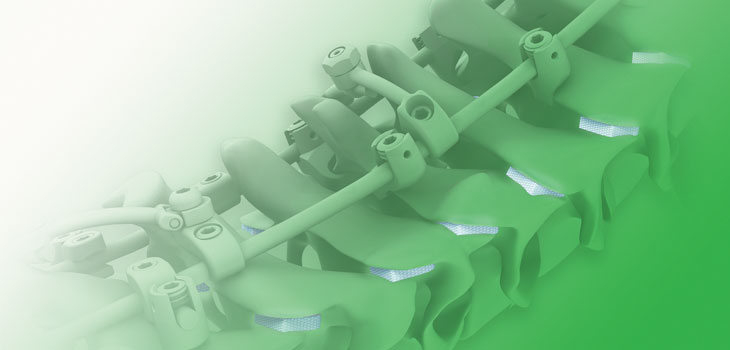
The CERVICAL FACETLIFTSM ID/S surgical technique is a procedure that indirectly decompresses the neural foramen and stabilizes the cervical spine. This technique is accomplished by placing structured allograft spacers, Cornerstone Facet MicroGrafts, into the posterior cervical (neck) facet joints.
According to a company press release, the technique increases the volumetric area of the exiting nerve root that may be compressed causing a neurological deficit. In addition, this technique may reduce the bending direction of the cervical spine.
“This reduction in bending may assist in fusion following supplemental fixation such as the Vertex Select Reconstruction System when used to treat DDD (degenerate disc disease–neck pain of discogenic origin with degeneration of the disc confirmed by history and radiographic studies), spondylolisthesis, spinal stenosis, fracture, dislocation, failed previous fusion and/or tumors.
The system is comprised of a small set of surgical instrumentation that the company says will aid in the preparation of the facet joints and for the placement of the grafts into the joints.
The company statement adds that these results were shown in biomechanical studies and may vary in human clinical outcomes.
Author
React:
Discussion
This is a fascinating development. In my practice we've seen similar outcomes with the revised protocol. The key differentiator seems to be patient selection criteria. Has anyone else noticed the correlation with BMI thresholds?
Great point. I'd push back slightly on the conclusion, the sample size in the cited study is too small to draw population-level inferences. That said, the directional signal is compelling and worth a larger RCT.
We implemented a similar approach last year. Early results are promising but we're still gathering 12-month follow-up data. Happy to share our protocol if anyone is interested.
Join the conversation
Orthopedic professionals are discussing this. Sign in and upgrade to read every comment and add your voice.