
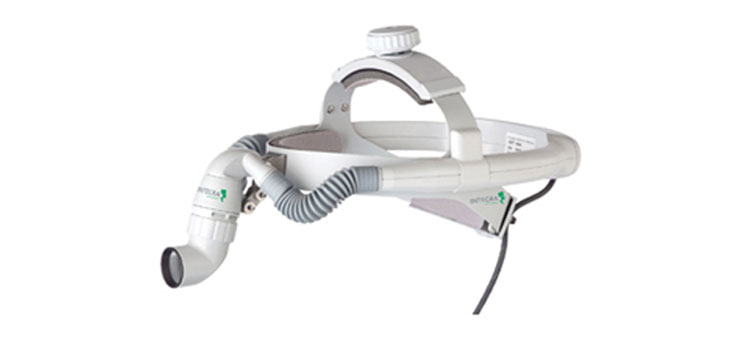
A device made by Integra LifeSciences Holdings Corporation has won first place in the “Capital Equipment” category of the 2012 “Excellence in Surgical Products Awards” (ESP) competition sponsored by Surgical Products magazine. The winning item is Integra’s LED Headlight System, which was showcased in the November/December issue of the magazine.
Integra’s LED Headlight System Wins Award
1 min read Premium comments
Secondary
Integra officials describe the LED Headlight System as a surgical headlight designed to deliver cool brightness and color along with increased mobility in the operating room. The device’s 25, 000+ hour lamp life helps limit uncertainty by ensuring a longer life than more traditional xenon surgical lighting systems, which have a lamp life of approximately 1, 000 hours. The LED Headlight System also provides mobility with a lightweight battery option that allows surgeons untethered mobility within the operating room. A 20-foot cord provides a backup power option.
The readers of Surgical Products magazine selected the winners of the fourth annual ESP Awards. The magazine’s editors asked their readers to select the products which contributed the most to surgical performance, efficiency and safety. A publication for surgeons, anesthesiologists and department heads in charge of operating/emergency rooms, the magazine has a circulation of 55, 000.
“We are honored that our headlight system was selected as one of the top products by readers of Surgical Products magazine, ” said Dan Reuvers, President, Instruments. “This is a nice validation by our customers that we’re helping surgeons limit uncertainty by equipping them with a bright and long-lasting headlight that allows them to move about the operating room freely.”
Author
React:
Discussion
This is a fascinating development. In my practice we've seen similar outcomes with the revised protocol. The key differentiator seems to be patient selection criteria. Has anyone else noticed the correlation with BMI thresholds?
Great point. I'd push back slightly on the conclusion, the sample size in the cited study is too small to draw population-level inferences. That said, the directional signal is compelling and worth a larger RCT.
We implemented a similar approach last year. Early results are promising but we're still gathering 12-month follow-up data. Happy to share our protocol if anyone is interested.
Join the conversation
Orthopedic professionals are discussing this. Sign in and upgrade to read every comment and add your voice.