
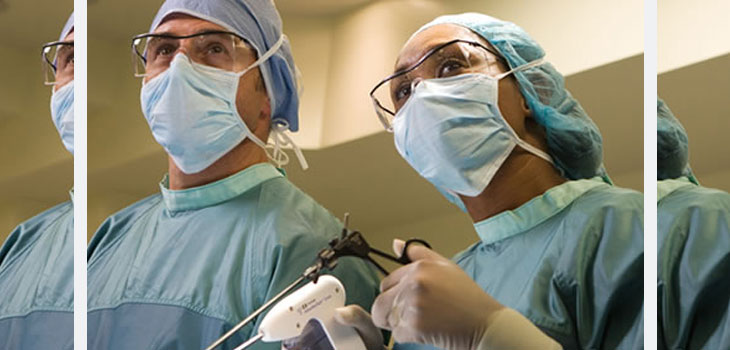
Covidien, Inc., a New Haven, Connecticut, based healthcare products provider, is launching its AS Meniscal Repair Device. According to company officials, the AS Meniscal Repair Device allows orthopedic surgeons to perform “all-inside, ” minimally invasive arthroscopic surgery to repair a torn meniscus in the knee using the “all-suture” method of fixation.
Covidien Launches New Meniscus Repair Device
1 min read Premium comments
Secondary
“Any meniscal repair system needs to deliver high-strength fixation in order to optimize the biologic healing potential, ” said Bryan M. Huber, M.D., Board Certified Orthopedic Surgeon at Mansfield Orthopaedics in Stowe, Vermont. “The AS Meniscal Repair Device enables surgeons to leverage the value of using the gold standard all-suture approach in a less invasive arthroscopic fashion.”
Covidien officials say that their bench-top tests confirm that the device consistently and reliably deploys sutures with strong holding power without the need for anchors. Huber added, “In my practice, I have experienced a consistently high rate of firing success when using the AS Meniscal Repair Device. With an all-suture method of fixation, the AS Meniscal Repair Device eliminates any migration risk of broken tacks or anchors which could cause damage inside the knee and may lead to increased operative time during removal. The device has improved my operative efficiency by delivering a high level of reliability and success.”
According to the December 4 press release, the new device works with only one thumb slide actuation and no complex components. It features clear, laser-etched depth markings on the specially coated needles, allowing for precision in depth of penetration. Needles are available in two configurations, curved and straight, to meet surgeons’ diverse repair needs.
A torn meniscus is one of the most common injuries to the knee. According to a market analysis conducted by Millennium Research Group, in 2010 surgeons performed more than 840, 000 procedures relating to meniscal injuries in the United States. Covidien officials anticipate that meniscus repair procedures utilizing fixation devices will increase at an eight percent compound annual growth rate through 2015.
Author
React:
Discussion
This is a fascinating development. In my practice we've seen similar outcomes with the revised protocol. The key differentiator seems to be patient selection criteria. Has anyone else noticed the correlation with BMI thresholds?
Great point. I'd push back slightly on the conclusion, the sample size in the cited study is too small to draw population-level inferences. That said, the directional signal is compelling and worth a larger RCT.
We implemented a similar approach last year. Early results are promising but we're still gathering 12-month follow-up data. Happy to share our protocol if anyone is interested.
Join the conversation
Orthopedic professionals are discussing this. Sign in and upgrade to read every comment and add your voice.