
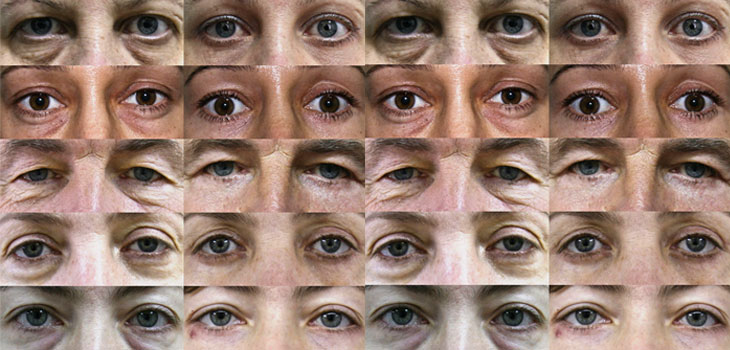
Ferris Jabr, writing in Scientific American, has issued a strong warning about clinics across the country that are offering a variety of untested stem cell treatments for cosmetic and medical purposes. Jabr relates the experience of cosmetic surgeon Allan Wu with a patient in her late 60s. The woman had come to Wu because she had difficulty opening her right eye, and, when she forced it open, she experienced pain and heard strange sounds—like sharp clicks.
Cosmetic Surgery Stem Cell Debacle
1 min read Premium comments
Secondary
During a lengthy surgery Wu discovered the problem. Small chunks of bone had become embedded in the woman’s eyelid and in the tissue surrounding her eyes. The clicks she heard were the bone fragments grinding against one another.
It turned out that about three months earlier the woman had gone in for a relatively new kind of face-lift procedure at a Beverly Hills clinic—one that used her own stem cells.
The cosmetic surgeon had extracted mesenchymal stem cells from some of the woman’s abdominal fat and injected those cells back in her face and around her eyes.
During the face-lift procedure the clinicians had also injected some dermal filler, which plastic surgeons use to reduce the appearance of wrinkles. The principal component of such fillers is calcium hydroxylapatite, a mineral with which cell biologists encourage mesenchymal stem cells to turn into bone—a fact that, Jabr notes, apparently escaped the attention of the woman’s physicians.
Noting that dozens, if not hundreds, of clinics across the country offer a variety of similar untested stem cell treatments for both cosmetic and medical purposes, Jabr wrote: “Few of these cosmetics have been properly tested in published experiments, yet the companies that manufacture them say they may heal damaged organs, slow or reverse natural aging, restore youthful energy and revitalize the skin. Whether such cosmetics may also produce unintended and potentially harmful effects remains largely unexamined. The increasing numbers of untested and unauthorized stem cell treatments threaten both people who buy them and researchers hoping to conduct clinical trials for promising stem cell medicine.”
Author
React:
Discussion
This is a fascinating development. In my practice we've seen similar outcomes with the revised protocol. The key differentiator seems to be patient selection criteria. Has anyone else noticed the correlation with BMI thresholds?
Great point. I'd push back slightly on the conclusion, the sample size in the cited study is too small to draw population-level inferences. That said, the directional signal is compelling and worth a larger RCT.
We implemented a similar approach last year. Early results are promising but we're still gathering 12-month follow-up data. Happy to share our protocol if anyone is interested.
Join the conversation
Orthopedic professionals are discussing this. Sign in and upgrade to read every comment and add your voice.