
Researchers at Western University in Canada have made a discovery that could lead to a better understanding of what the Arthritis Society indicates is the second most common form of arthritis—“diffuse idiopathic skeletal hyperostosis” or DISH.
Breakthrough in Arthritis Research
1 min read Premium comments
Secondary
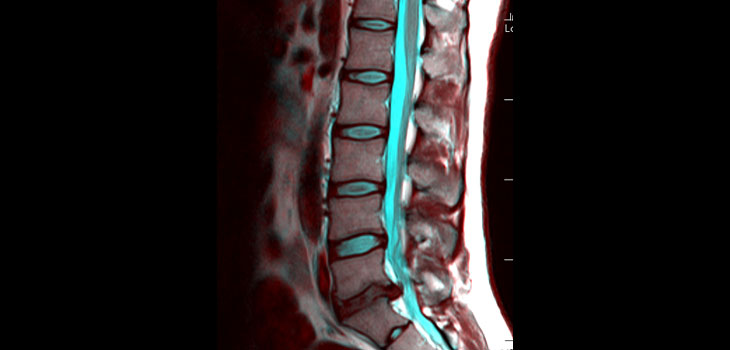
DISH is a form of degenerative arthritis and is characterized by the formation of excessive mineral deposits along the sides of the vertebrae in the neck and back. Those suffering with this malady usually experience spine pain and stiffness and in advanced cases, difficulty swallowing and damage to spinal nerves. The cause of DISH is unknown and there are no specific treatments…but there is progress.
Now researchers at Western University’s Bone and Joint Initiative, with collaborator Doo-Sup Choi at the Mayo Clinic in Rochester, Minnesota have discovered the first-ever mouse model of this disease. The research is published online in the Journal of Bone and Mineral Research.
“This model will allow us for the first time to uncover the mechanisms underlying DISH and related disorders. Knowledge of these mechanisms will ultimately allow us to test novel pharmacological treatments to reverse or slow the development of DISH in humans, ” says corresponding author Cheryle Séguin in the December 3, 2012 news release. Séguin is with the Skeletal Biology Laboratories and the Department of Physiology and Pharmacology at Western’s Schulich School of Medicine & Dentistry.
Graduate student Derek Bone, working under the supervision of pharmacologist James Hammond, was studying mice that had been genetically modified to lack a specific membrane protein that transports adenosine when he noticed that these mice developed abnormal calcification (mineralization) of spinal structures.
Changes in the backbone of these mice were characterized by an interdisciplinary team which included: Sumeeta Warraich, Diana Quinonez, Hisataka Ii, Maria Drangova, David Holdsworth and Jeff Dixon. Their findings established that spinal mineralization in these mice resembles DISH in humans and point to a role for adenosine in causing abnormal mineralization in DISH.
React:
Discussion
This is a fascinating development. In my practice we've seen similar outcomes with the revised protocol. The key differentiator seems to be patient selection criteria. Has anyone else noticed the correlation with BMI thresholds?
Great point. I'd push back slightly on the conclusion, the sample size in the cited study is too small to draw population-level inferences. That said, the directional signal is compelling and worth a larger RCT.
We implemented a similar approach last year. Early results are promising but we're still gathering 12-month follow-up data. Happy to share our protocol if anyone is interested.
Join the conversation
Orthopedic professionals are discussing this. Sign in and upgrade to read every comment and add your voice.