
Increasing numbers of doctors and hospitals are treating patients with stem cells and providing anecdotal evidence of their results. In Bangalore a multi-specialty hospital claims to have successfully used stem cells to cure a hip joint disorder.
Stem Cells Treat Hip Necrosis
1 min read Premium comments
Secondary
“We have so far treated seven patients, including two non-resident Indians (NRIs) suffering from hip joint disorder using their stem cells and helped them to resume normal life within months, ” said the hospital chairman H.N. Nagaraj.
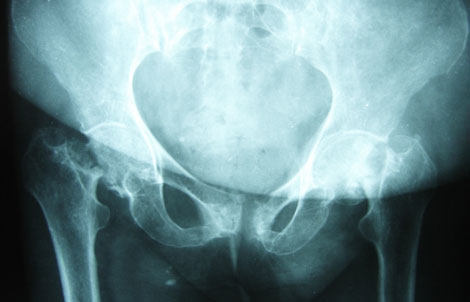
He described avascular necrosis as a disease leading to a loss of blood supply to the hip joint. If not treated early, the dislocation of the hip bone can result in disability. He said that any serious injury, medications such as steroids, blood coagulation or excessive alcohol can cause blood loss.
Nagaraj said,
Stem cell therapy has been used for the first time in the world to treat the hip bone disorder by rejuvenating its tissues with the bone marrow of the patient. Stem cells in the marrow of the affected bone are separated from red blood cells and blood plasma through a clinical process and injected into the hip joint of the patient.
The private hospital on the city’s outskirts has contracted with a Pune-based laboratory to harvest the stem cells and transplant them through four injections over four weeks to restore the hip joint function lost due to damage to its cartilage. The stem cells also repair bone cells as they can differentiate between bone and cartilage cells.
“The novel treatment has no bleeding or scar formation as the process does not involve surgery. The patient has to visit our hospital for a day in a week for each of the four injections, ” Nagaraj said.
The hospital plans to submit its therapy treatment protocol for publication in the Journal of Mass & Heat Transfer in the United States and Britain and file for an international patent and intellectual property rights.
Author
React:
Discussion
This is a fascinating development. In my practice we've seen similar outcomes with the revised protocol. The key differentiator seems to be patient selection criteria. Has anyone else noticed the correlation with BMI thresholds?
Great point. I'd push back slightly on the conclusion, the sample size in the cited study is too small to draw population-level inferences. That said, the directional signal is compelling and worth a larger RCT.
We implemented a similar approach last year. Early results are promising but we're still gathering 12-month follow-up data. Happy to share our protocol if anyone is interested.
Join the conversation
Orthopedic professionals are discussing this. Sign in and upgrade to read every comment and add your voice.