
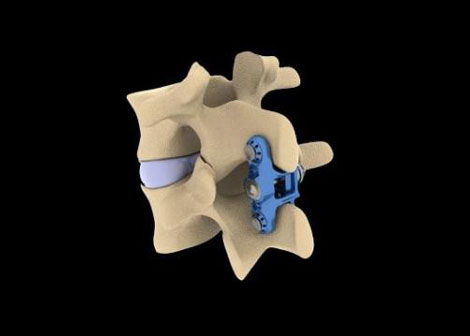
The second generation of OsteoMed Spine’s PrimaLok SP Interspinous Fusion System was on display at the North American Spine Society (NASS) annual meeting in Dallas, Texas last month. The additions include smaller 4mm and 6mm implant sizes as well new sterile packaging. The company made the PrimaLOK SP Interspinous Fusion System commercially available beginning in 2010.
OsteoMed Spine Adds New Implants
1 min read Premium comments
Secondary
David Muller, vice president of OsteoMed Spine, said, “These enhancements to our PrimaLOK SP Interspinous Fusion System strengthen our offering to spine surgeons seeking a low profile, minimally invasive approach. New instrument options help minimize operating room time and preserve patient anatomy, while the addition of 4mm and 6mm implant sizes accommodates the narrow spinous process opening at certain levels of the lumbar and thoracic spine.” OsteoMed, based in Dallas, Texas, is a privately held company that was founded in 1991.
Author
React:
Discussion
This is a fascinating development. In my practice we've seen similar outcomes with the revised protocol. The key differentiator seems to be patient selection criteria. Has anyone else noticed the correlation with BMI thresholds?
Great point. I'd push back slightly on the conclusion, the sample size in the cited study is too small to draw population-level inferences. That said, the directional signal is compelling and worth a larger RCT.
We implemented a similar approach last year. Early results are promising but we're still gathering 12-month follow-up data. Happy to share our protocol if anyone is interested.
Join the conversation
Orthopedic professionals are discussing this. Sign in and upgrade to read every comment and add your voice.