
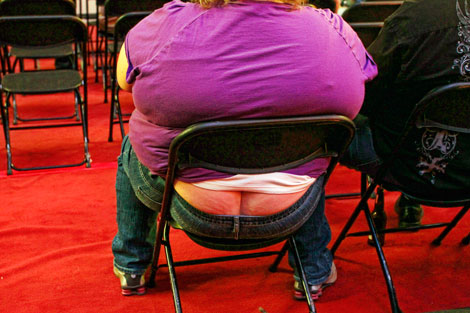
It should not come as a surprise, but research published in the Journal of Foot and Ankle Surgery has found that being obese nearly doubles the odds of a patient having an ankle fracture of the most severe category. Researchers, in their study of 280 patients, explored the association between obesity and the severity of ankle fractures. They analyzed the X-rays of each patient’s ankle fracture, classified the severity of each injury, took into account each patient’s body mass index (BMI), age, tobacco use, sex and whether or not they were diabetic or had osteoporosis.
Obesity Factor in Ankle Fractures
1 min read Premium comments
Secondary
The researchers found that being overweight or obese was associated with an increased risk of musculoskeletal problems. The increase in weight also has grave effects on the bone and joints, increasing the risk of osteoarthritis and (potentially) the need for total joint replacement at a younger age.
They found a strong correlation between more severe ankle fractures and obesity, especially for obese men younger than 25, and obese women older than 50. Alan MacGill, M.D., a Florida foot and ankle surgeon said, “We are seeing more severe injury patterns in the obese population compared to the non-obese. These severe ankle fractures tend to have a worse prognostic outcome compared to others.”
He added, “The findings of this study correlate with what I continue to see in my practice. It’s basic physics; as body mass increases, so does the kinetic energy associated with the injury. The higher the body mass, the greater the risk of more severe ankle injury.”
Author
React:
Discussion
This is a fascinating development. In my practice we've seen similar outcomes with the revised protocol. The key differentiator seems to be patient selection criteria. Has anyone else noticed the correlation with BMI thresholds?
Great point. I'd push back slightly on the conclusion, the sample size in the cited study is too small to draw population-level inferences. That said, the directional signal is compelling and worth a larger RCT.
We implemented a similar approach last year. Early results are promising but we're still gathering 12-month follow-up data. Happy to share our protocol if anyone is interested.
Join the conversation
Orthopedic professionals are discussing this. Sign in and upgrade to read every comment and add your voice.