
The Food and Drug Administration (FDA) has continued its slew of cervical disc approvals by notifying LDR Spine USA, Inc. that it has given the firm an “Approvable Letter” for the company’s Mobi-C cervical disc. The firm made the announcement on November 6.
LDR’s Mobi-C Receives “Approvable Letter”
1 min read Premium comments
Secondary
First Two-Level Approval
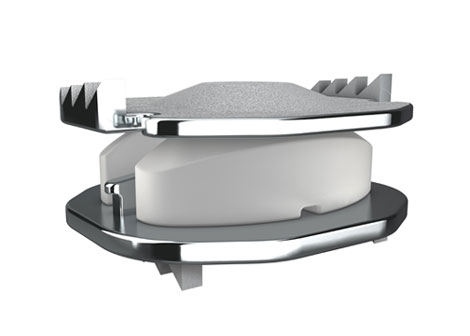
The Mobi-C is a metal and polyethylene mobile bearing prosthesis specifically designed as a low-profile cervical intervertebral disc replacement for both one and two level applications. A company spokesperson said the Mobi-C is the first and only cervical disc to receive an approvable letter for two-level use in the treatment of cervical degenerative disc disease (DDD) in the U.S. The approval follows a 600 patient concurrent IDE (investigational device exemption) clinical trial for one and two-level cervical disc replacement.
FDA has determined that Mobi-C is approvable for two-level indications, subject to the satisfaction of all applicable requirements of the Quality System Regulations (21 CFR Part 820), as well as finalization of the labeling and post-approval study. FDA will issue an approval order, allowing commercial sale and distribution, after said requirements have been reviewed and determined to be acceptable.
By the age of 50, 85% of the population will show evidence of disc degeneration, according to the company. “Two-level disease is by far the most prevalent and the IDE trial showed that Mobi-C is clinically superior compared to the gold standard treatment, fusion. This is a large market of patients for which currently there are no devices approved, ” continued the company statement.
2013 Launch Expected
“We are confident that we can efficiently complete the remaining requirements inherent in the full approval process and we anticipate commercial U.S. availability of Mobi-C in 2013, ” said Christophe Lavigne, president and CEO of LDR. “Given the high incidence of two-level cervical disease, we are proud that Mobi-C may become the first cervical disc available to treat patients on-label that suffer from two-level pathology.
This is the third FDA approval of a cervical disc in the last month. Also approved were Globus Medical, Inc.’s Secure-C and NuVasive, Inc.’s PCM.
Author
React:
Discussion
This is a fascinating development. In my practice we've seen similar outcomes with the revised protocol. The key differentiator seems to be patient selection criteria. Has anyone else noticed the correlation with BMI thresholds?
Great point. I'd push back slightly on the conclusion, the sample size in the cited study is too small to draw population-level inferences. That said, the directional signal is compelling and worth a larger RCT.
We implemented a similar approach last year. Early results are promising but we're still gathering 12-month follow-up data. Happy to share our protocol if anyone is interested.
Join the conversation
Orthopedic professionals are discussing this. Sign in and upgrade to read every comment and add your voice.