
Step by step researchers are closing in on a major goal in orthopedics—engineering replacement cartilage for joints from stem cells. Building on the work honored with this years’ Nobel Prize in medicine which demonstrated that adult stem cells could be made to take on the properties of embryonic stem cells, researchers at Duke University, Durham, North Carolina, have successfully created articular cartilage tissue.
Go Duke! Researchers Create Joint Cartilage
2 min read Premium comments
Secondary
Farshid Guilak, Ph.D., Laszlo Ormandy Professor of Orthopaedic Surgery at Duke and Brian O. Diekman, Ph.D.., a post-doctoral associate in orthopaedic surgery, reported their results in the journal the Proceedings of the National Academy of Sciences. “What this research shows in a mouse model is the ability to create an unlimited supply of stem cells that can turn into any type of tissue—in this case cartilage, which has no ability to regenerate by itself, ” said Guilak, senior author of the study.
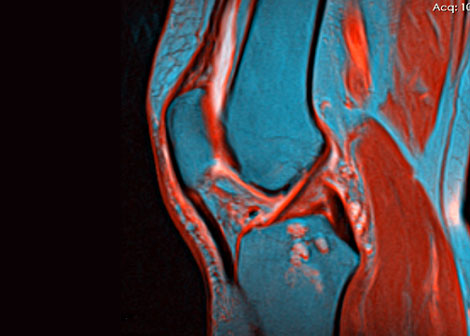
Articular cartilage is the shock absorber tissue in joints that makes it possible to walk and perform daily activities without pain. Ordinary wear-and-tear or an injury can diminish cartilage’s effectiveness and it may progress to osteoarthritis. Because articular cartilage has a poor capacity for repair, osteoarthritis is a leading cause of impairment and often requires joint replacement.
A major challenge the researchers had to overcome was developing a uniformly differentiated population of chondrocytes, the cells that produce collagen and maintain cartilage, while culling other types of cells that the induced pluripotent stem cells (iPSCs) could form.
They solved the problem of chondrocyte differentiation in iPSCs derived from adult mouse fibroblasts by treating cultures with a growth medium. They tailored the cells to express green fluorescent protein only when the cells successfully became chondrocytes. As the iPSCs differentiated, the chondrocyte cells that glowed with the green fluorescent protein were easily identified and sorted from the undesired cells.
The tailored cells produced great amounts of cartilage components, including collagen, and showed the characteristic stiffness of native cartilage, suggesting they would work well in repairing cartilage defects in the body.
“This was a multi-step approach, with the initial differentiation, then sorting, and then proceeding to make the tissue, ” Diekman said. “What this shows is that iPSCs can be used to make high quality cartilage, either for replacement tissue or as a way to study disease and potential treatments.” Diekman and Guilak said the next phase of their research will be to use human iPSCs to test their cartilage-growing technique.
Author
React:
Discussion
This is a fascinating development. In my practice we've seen similar outcomes with the revised protocol. The key differentiator seems to be patient selection criteria. Has anyone else noticed the correlation with BMI thresholds?
Great point. I'd push back slightly on the conclusion, the sample size in the cited study is too small to draw population-level inferences. That said, the directional signal is compelling and worth a larger RCT.
We implemented a similar approach last year. Early results are promising but we're still gathering 12-month follow-up data. Happy to share our protocol if anyone is interested.
Join the conversation
Orthopedic professionals are discussing this. Sign in and upgrade to read every comment and add your voice.