
The U.S. Government Accountability Office (GAO) says that self-referral incentives for physicians for CT (computed tomography) and MRI (magnetic resonance imaging) services are “likely a major factor” in driving an increase in services that cost Medicare an extra $109 million in 2010. The 52-page study was conducted at the request of Congress and released in September.
GAO: Imaging Self-Referrals Waste Taxpayers $109 Million
3 min read Premium comments
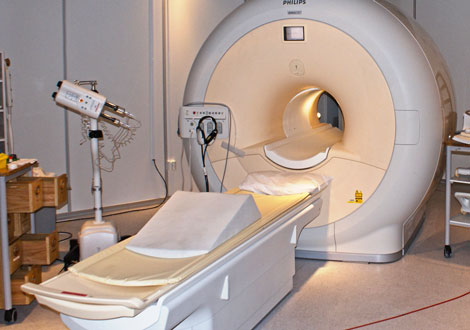
Secondary
Self-Referral Increases
The study found that from 2004 through 2010, the number of self-referred services had a larger increase than non-self-referred advanced imaging services and that provider’s referrals of those services increased the year after providers gained an ownership interest in the imaging services.
Specifically, the number of self-referred MRI services increased from about 380, 000 services in 2004 to about 700, 000 services in 2010, an increase of more than 80%. In contrast, the number of non-self-referred MRI services grew about 12% over the same time period, from about 1.97 million services in 2004 to about 2.21 million services in 2010.
“The results of this report are eye opening, ” said Senator Max Baucus, chairman of the Senate Finance Committee in a press release. “Self-referrals offer an incentive for providers to order more tests than they would otherwise. It’s clear they are driving up costs. Providers’ bottom lines shouldn’t be getting in the way of their patients’ care and best interests.”
AAOS: Improved Outcomes
John Tongue, M.D., president of American Academy of Orthopaedic Surgeons, responded by pointing out that self-referred imaging services are timely and accessible. He said being able to provide in-office imaging services can lead to greater patient adherence to treatment plans and improved outcomes. “Significant technological advances have been made in our field so that patients can receive timely and accessible screenings from the comfort of their doctor’s office. We believe that any restriction on this convenience would threaten the quality of care being delivered to our patients.”
Financial Incentives
While acknowledging that these services can help in the early detection and aid in the treatment of certain diseases, the GAO says its findings indicate that factors other than the health status of patients, provider practice size or specialty, or geographic location (i.e., rural or urban) helped drive the higher advanced imaging referral rates among self-referring providers compared to non-self-referring providers.
“We found that providers who began to self-refer advanced imaging services—after purchasing or leasing imaging equipment or joining practices that self-referred—substantially increased their referrals for MRI and CT services relative to other providers. This suggests that financial incentives for self-referring providers may be a major factor driving the increase in referrals. These financial incentives likely help explain why, in 2010, providers who self-referred made 400, 000 more referrals for advanced imaging services than they would have if they were not self-referring.
“These additional referrals cost CMS (Centers for Medicare and Medicaid Services) more than $100 million in 2010 alone. To the extent that these additional referrals are unnecessary, they pose an unacceptable risk for beneficiaries, particularly in the case of CT services, which involve the use of ionizing radiation, ” stated the study.
Recommendations
The GAO study recommends that the Administrator of CMS take the following three actions:
-
Insert a self-referral flag on its Medicare Part B claims form and require providers to indicate whether the advanced imaging services for which a provider bills Medicare are self-referred or not.
-
Determine and implement a payment reduction for self-referred advanced imaging services to recognize efficiencies when the same provider refers and performs a service.
-
Determine and implement an approach to ensure the appropriateness of advanced imaging services referred by self-referring providers.
The Department of Health and Human Services stated it would consider the first recommendation, but did not concur with the others.
To read the entire study, click here.
Author
React:
Discussion
This is a fascinating development. In my practice we've seen similar outcomes with the revised protocol. The key differentiator seems to be patient selection criteria. Has anyone else noticed the correlation with BMI thresholds?
Great point. I'd push back slightly on the conclusion, the sample size in the cited study is too small to draw population-level inferences. That said, the directional signal is compelling and worth a larger RCT.
We implemented a similar approach last year. Early results are promising but we're still gathering 12-month follow-up data. Happy to share our protocol if anyone is interested.
Join the conversation
Orthopedic professionals are discussing this. Sign in and upgrade to read every comment and add your voice.