
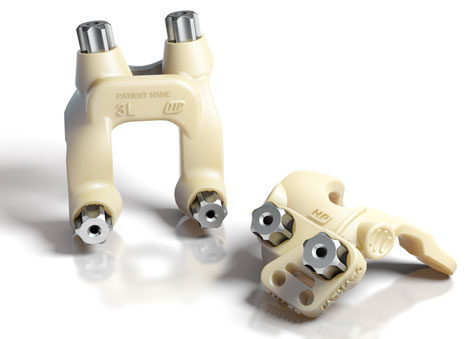
DePuy Orthopaedics, Inc. is now offering the Trumatch Pin Guide for use with their Sigma Fixed Bearing Total Knee System. The guide recently received 510(k) clearance from the FDA, according to a November 7 press release from the company.
DePuy’s Personalized Knee Adds Options
1 min read Premium comments
Secondary
With this offering, the company says surgeons now have the option to choose whether to utilize a pin guide or cutting guide in their procedure. The guide is part of the company’s personalized solutions portfolio which includes surgical instrumentation and a computer software system that is designed to aid in knee implant positioning.
Specifically, the company says the pin guide offers surgeons:
-
Intra-operative flexibility for surgeons desiring to make changes during the surgical procedure
-
A smaller, lower profile jig for less invasive procedures
-
An integrated alignment guide to improve ease of use
-
Reusable, re-sterilizable metal guides for pin drilling
Michael Swank, M.D., Medical Director of Research for Joint Preservation, Restoration and Reconstruction at the Christ Hospital in Cincinnati, Ohio, said that in a recent study that he conducted on the benefits of customized patient instrumentation, he found that DePuy system provided his patients, “not only a potentially faster operation, but also a shorter hospital stay without sacrificing clinical outcome or clinical alignment.”
Trumatch Personalized Solutions originally launched in 2009 and is now available in 24 countries. The Sigma knee system, which includes fixed bearing and rotating platform options, is, according to the company, the leading knee system in the U.S. and has been provided for nearly 1.7 million patients.
Author
React:
Discussion
This is a fascinating development. In my practice we've seen similar outcomes with the revised protocol. The key differentiator seems to be patient selection criteria. Has anyone else noticed the correlation with BMI thresholds?
Great point. I'd push back slightly on the conclusion, the sample size in the cited study is too small to draw population-level inferences. That said, the directional signal is compelling and worth a larger RCT.
We implemented a similar approach last year. Early results are promising but we're still gathering 12-month follow-up data. Happy to share our protocol if anyone is interested.
Join the conversation
Orthopedic professionals are discussing this. Sign in and upgrade to read every comment and add your voice.