
Advanced Biologics, LLC has succeeded in the validation of its OsteoAMP process which showed no clinically relevant donor-to-donor variation. The testing used 100 consecutive allograft donors whose gifts were processed into products that resulted in 100% clinical success in 300 lumbar and cervical spine fusions, according to a company release.
Advanced Biologics Validates Growth Factor in OsteoAMP
1 min read Premium comments
Secondary
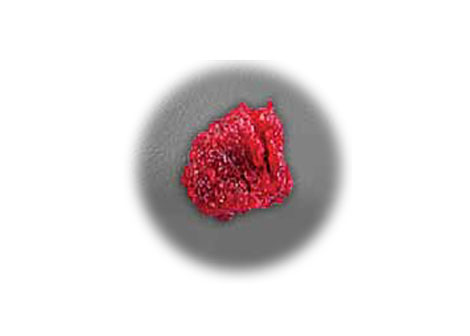
Company officials describe OsteoAMP as an allogenic growth factor that is a lower-cost alternative to recombinant growth factors, such as rhBMP-2 (Infuse, Medtronic). OsteoAMP’s four distinctive formats—granules, compressible sponges, putty, and structural grafts—allow surgeons to tailor deliver of the technology according to their needs in surgery.
Through Advanced Biologics proprietary process, allograft and its native bone marrow are processed and the BMPs (Bone morphogenetic protein) and growth factors found within the bone marrow cells are extracted and bound to the allograft. This process results in an end product that, company officials claim, has shown to contain 500 to 1, 000 times the BMP and growth factor amounts of any autograft or allograft derived biologic on the market.
Founded in 2009 and located in Ladera Ranch, California, Advanced Biologics is a privately held company focused on developing innovative and clinically relevant biologic solutions across a wide degree of medical specialties. The company was awarded the Best New Regenerative Technology award in 2009, Best New Biomaterial Technology Award in 2010, and 2011 Best New Technology in Biomaterials and Biologics by the Orthopedics This Week Spine Technology Awards.
Author
React:
Discussion
This is a fascinating development. In my practice we've seen similar outcomes with the revised protocol. The key differentiator seems to be patient selection criteria. Has anyone else noticed the correlation with BMI thresholds?
Great point. I'd push back slightly on the conclusion, the sample size in the cited study is too small to draw population-level inferences. That said, the directional signal is compelling and worth a larger RCT.
We implemented a similar approach last year. Early results are promising but we're still gathering 12-month follow-up data. Happy to share our protocol if anyone is interested.
Join the conversation
Orthopedic professionals are discussing this. Sign in and upgrade to read every comment and add your voice.