
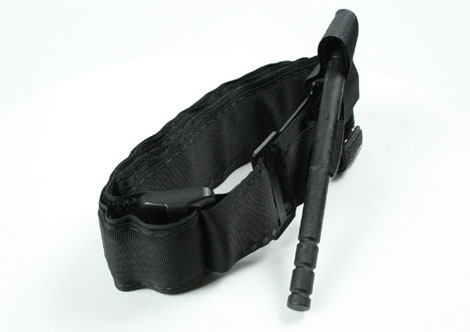
Presumed inconsequential actions can make a big difference where pain is concerned. The timing of the application of a thigh tourniquet on a patient undergoing forefoot surgery can determine how painful the procedure will be, according to research published in Food and Ankle Surgery and reported by Lynda Williams, Medwire News reporter.
Timing of Pain Block, Tourniquet Crucial
1 min read Premium comments
Secondary
The findings show that patients who were given an ankle block after the tourniquet was inflated had significantly better pain control 24 hours after surgery than did patients whose tourniquet was inflated before the ankle block was administered. The pain was measured in a visual analog scale (VAS) at 4.5 versus 6.3 points. Pain scores were also better in the post than in the pre-tourniquet group four hours after surgery, at 2.5 versus 3.9 points.
“These results could be explained by our hypothesis that local concentration of anaesthetic falls due to systemic absorption in patients who had the block before tourniquet application leading to early wearing of block, ” said Vinay Kumar Singh and co-workers from Epsom and St. Helier Hospital in Carshalton, UK.
Singh randomly assigned 60 patients undergoing hallux valgus reconstruction using Chevron or Scarf osteotomy to receive ankle block with 20 ml of 0.5% bupivacaine before (n=30) tourniquet application or after application, . The delay was approximately five minutes. Patients were operated on by a single surgeon.
As well as improved VAS scores, patients given ankle block after application of the tourniquet were less likely to require oral analgesia than were pre-tourniquet patients both 4 hours (5 vs. 30%) and 24 hours (65 vs. 85%) after surgery.
The researchers say their findings show that “ankle block can be effective even when its application is solely based on anatomical land marks in absence of pulses showing that the anatomical knowledge and experience of the operating surgeon is of great importance.” They also note that their results indicate that “timing of block to tourniquet may not be as relevant in early hours but is crucial in later postoperative hours.”
Author
React:
Discussion
This is a fascinating development. In my practice we've seen similar outcomes with the revised protocol. The key differentiator seems to be patient selection criteria. Has anyone else noticed the correlation with BMI thresholds?
Great point. I'd push back slightly on the conclusion, the sample size in the cited study is too small to draw population-level inferences. That said, the directional signal is compelling and worth a larger RCT.
We implemented a similar approach last year. Early results are promising but we're still gathering 12-month follow-up data. Happy to share our protocol if anyone is interested.
Join the conversation
Orthopedic professionals are discussing this. Sign in and upgrade to read every comment and add your voice.