
Shinya Yamanaka, the scientist who won this year’s Nobel Prize for developing induced pluripotent stem cells (iPS), is also an athlete. Yamanaka ran in this year’s Tokyo Marathon in March to raise money for basic iPS research and covered the distance in 4 hours 3 minutes 19 seconds. He is scheduled to run again in the second Osaka Marathon on November 25.
Nobel Prize Winner Runs Marathons
1 min read Premium comments
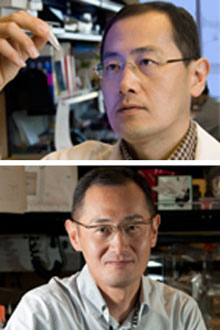
As a high school student Yamanaka practiced judo, breaking one or two bones a year. His friends say that those experiences prompted him to pursue a career in sports medicine and eventually to study iPS cells.
“He was aggressive when it came to judo, ” said Soichi Tanaka, 50, a fellow member of Yamanaka’s high school judo club. “Today he makes steady efforts in his research—the same attitude he already had in those days.” He added that Yanaka was basically a gentle person.
Yanaka also played rugby. Yukihito Hasunuma, a 51-year-old doctor who was one of Yamanaka’s teammates in the Kobe University rugby club said, “[Yamanaka] was not a smart player, but his technique was good and he was able to keep the other team from stealing the ball. He was a serious student, and returned to his classes as soon as practice ended.”
During a press conference, Yamanaka was asked what place he thought he would be in if he was running a marathon. “I’d be in the middle, ” he said.
Author
React:
Discussion
This is a fascinating development. In my practice we've seen similar outcomes with the revised protocol. The key differentiator seems to be patient selection criteria. Has anyone else noticed the correlation with BMI thresholds?
Great point. I'd push back slightly on the conclusion, the sample size in the cited study is too small to draw population-level inferences. That said, the directional signal is compelling and worth a larger RCT.
We implemented a similar approach last year. Early results are promising but we're still gathering 12-month follow-up data. Happy to share our protocol if anyone is interested.
Join the conversation
Orthopedic professionals are discussing this. Sign in and upgrade to read every comment and add your voice.