
Michael Terry. M.D., an orthopedic surgeon and sports medicine specialist at Northwestern Memorial Hospital and Northwestern University Feinberg School of Medicine, recommends an alternative treatment for a SLAP tear, a shoulder injury that often requires surgery and up to four months of rehabilitation.
New Treatment for Shoulder SLAP Tear
1 min read Premium comments
Secondary
A SLAP tear occurs in a part of the shoulder called the labrum, which is a cuff of cartilage that forms a cup for the arm bone to move within. This type of tear often specifically affects the biceps tendon, a cord-like structure connecting the biceps muscles to the bone at the shoulder as it travels toward the elbow, Terry said. Athletes who make repetitive overhead actions, such as baseball pitchers or swimmers are most prone to these injuries because of the enormous stress those activities place on the shoulder.
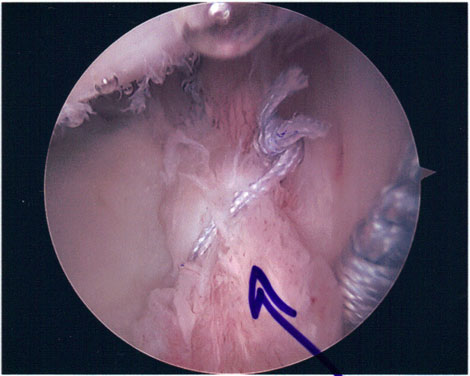
The alternative minimally invasive surgery which Terry performs—biceps tenodesis—is an outpatient arthroscopic procedure during which the surgeon treats the tear via two small incisions to cut the normal attachment of the biceps tendon then reattaches it to a position that is out of the way of the shoulder joint.
“Biceps tenodesis is a relatively new way to treat superior labral tears, but it’s quickly gaining popularity, ” Terry said. “Most patients who undergo this procedure find that they are able to return to activity in six to ten weeks; other options may require double that time for recovery and rehabilitation.”
Author
React:
Discussion
This is a fascinating development. In my practice we've seen similar outcomes with the revised protocol. The key differentiator seems to be patient selection criteria. Has anyone else noticed the correlation with BMI thresholds?
Great point. I'd push back slightly on the conclusion, the sample size in the cited study is too small to draw population-level inferences. That said, the directional signal is compelling and worth a larger RCT.
We implemented a similar approach last year. Early results are promising but we're still gathering 12-month follow-up data. Happy to share our protocol if anyone is interested.
Join the conversation
Orthopedic professionals are discussing this. Sign in and upgrade to read every comment and add your voice.