
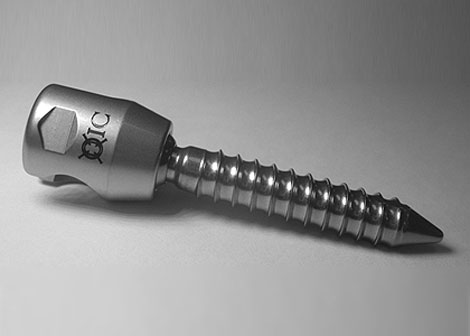
Generic implants can deliver significant cost savings without any sacrifice of quality or patient outcomes according to research presented at the 28th Annual Orthopaedic Trauma Association (OTA) meeting in Minneapolis. Two independent Institutional Review Board (IRB)-approved studies conducted by the Reno Orthopaedic Clinic and the University of Nevada School of Medicine examined the costs, implementation and clinical outcomes of the use of the Orthopaedic Implant Company’s (OIC) generic screws. The results showed that generic orthopaedic implants provide a high-quality, safe and affordable option for patients and hospitals.
Generics Pass Quality, Cost Test
2 min read Premium comments
Secondary
The authors concluded that generic screw utilization resulted in hospital cost savings of more than 65%—savings that are similar to those seen within the generic drugs market.
“These studies demonstrate the ability of generic implants to significantly lower implant costs to hospitals, insurance carriers and patients while providing high quality care and potentially saving the health care system billions of dollars in unnecessary costs, ” said the studies’ lead author Peter Althausen, M.D. “We’re not surprised by the studies’ findings. These results empower surgeons, hospitals and patients to feel comfortable choosing generic implants without having to worry about sacrificing quality.”
The studies looked at the use of generic equivalent 7.3 mm cannulated sacroiliac and femoral neck screws used in orthopaedic trauma procedures. The generic 7.3 mm cannulated screws made by OIC performed as well as conventional screws for the fixation of femoral neck fractures and posterior pelvic ring injuries.
In the first study, 45 femoral neck fracture patients treated with generic 7.3 mm cannulated screws made by OIC were compared to 50 patients treated with conventional screws. The study looked at operative time, estimated blood loss, complication rate, shortening, screw cutout, conversion to arthroplasty and varus collapse. There were no measurable differences between both sets of patients, and the hospital saw a 67% cost reduction by using OIC’s generic screws resulting in an annual savings of $34, 653 for the hospital.
The second study compared 35 patients treated with generic cannulated screws from OIC against 44 patients treated with conventional screws for posterior pelvic ring injuries. In the generic group, surgeons implanted 45 screws and 40 washers. In the conventional group surgeons implanted 59 screws and 50 washers.
A blind reviewer found there was no increase in operative time, estimated blood loss, complication rate, screw cutout, screw deformation or screw loosening. The hospital realized a 73% cost reduction, which translates to an annual savings of $14, 472. Hospital implant costs were decreased significantly without any associated increase in complication rate or radiographic outcome. Both studies concluded that, if generic implants were more commonly used, the results could have profound implications for the treatment of trauma patients.
OIC entered the medical device market in 2010, pledging to save more than a billion dollars in health care costs by 2015. The company’s implants are 50% to 60% of the average market price of premium implants, potentially saving health care systems millions of dollars a year. All OIC products are FDA approved and manufactured in ISO 13485 facilities.
Author
React:
Discussion
This is a fascinating development. In my practice we've seen similar outcomes with the revised protocol. The key differentiator seems to be patient selection criteria. Has anyone else noticed the correlation with BMI thresholds?
Great point. I'd push back slightly on the conclusion, the sample size in the cited study is too small to draw population-level inferences. That said, the directional signal is compelling and worth a larger RCT.
We implemented a similar approach last year. Early results are promising but we're still gathering 12-month follow-up data. Happy to share our protocol if anyone is interested.
Join the conversation
Orthopedic professionals are discussing this. Sign in and upgrade to read every comment and add your voice.