
ConforMIS, Inc. has announced the commercial availability of its iTotal G2 Knee Replacement System, the only patient-specific total knee replacement (TKR) available on the market today. The iTotal G2 incorporates improvements, based on a year’s worth of surgeon feedback, to the implants, instrumentation and patient specific planning guides.
ConforMIS: iTotal G2 Knee System Available
2 min read Premium comments
Secondary
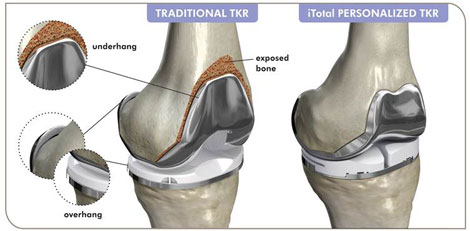
As indicated by ConforMIS, by preserving the core benefits of the iTotal TKR system, including an anatomic implant design with personalized fit, a patient-matched anatomic shape and greater bone preservation than traditional total knee replacements, the iTotal G2 is designed to address the drivers of patient dissatisfaction.
“The iTotal G2 is the most advanced and innovative knee system that ConforMIS has introduced, ” said Philipp Lang, M.D., company CEO, in the October 3, 2012 news release. “Our technology preserves more of a patient’s natural anatomy and their individual shape than is possible with off-the-shelf systems. The fact that the implants are personalized, not just the instruments, is what provides the iTotal G2 with clinical advantages that other systems will not be able to replicate.”
The iTotal G2 was developed on the foundation of the company’s patented iFit technology for designing patient-specific implants and jigs. Each iTotal G2 is made to fit an individual patient precisely based on their CT scan. The implant shape and geometry also closely matches the patient’s natural joint anatomy and curvatures.
“For the patient population that requires a total knee replacement, the physician’s ultimate goal is to give patients a long lasting, more natural feeling knee, ” added Dr. Gregory Martin, medical director of the Orthopedic Institute at JFK Medical Center in Florida and a member of the surgeon design team for the iTotal G2. “With the ConforMIS iTotal Knee System, I’m seeing in my early patient data that I’m resecting less bone, measuring less blood loss and that patients are having a quicker return to activities they enjoy. The patient response is noticeably different than what I’m used to seeing in my standard total knee patients.”
The iTotal G2 system comes packaged in a small sterile kit that includes the implant components and all of the disposable instruments for the procedure. Only one reusable instrument tray is required at the hospital for the iTotal G2.
John Slamin, senior vice president of knee implant engineering 
told OTW,
One of the beauties of working at ConforMIS is that we can make product improvements very quickly. We are unencumbered by inventory and we can take advantage of that business model to introduce enhancements to the system very quickly. The iTotal was in limited launch for about 16 months and during that time we listened to our customers and incorporated a broad set of enhancements to the system, most of which are designed to make the system faster and simpler for the surgeons. The iTotal G2 is a true second generation product, but with a much faster development cycle than is typical with an off-the-shelf model.
React:
Discussion
This is a fascinating development. In my practice we've seen similar outcomes with the revised protocol. The key differentiator seems to be patient selection criteria. Has anyone else noticed the correlation with BMI thresholds?
Great point. I'd push back slightly on the conclusion, the sample size in the cited study is too small to draw population-level inferences. That said, the directional signal is compelling and worth a larger RCT.
We implemented a similar approach last year. Early results are promising but we're still gathering 12-month follow-up data. Happy to share our protocol if anyone is interested.
Join the conversation
Orthopedic professionals are discussing this. Sign in and upgrade to read every comment and add your voice.