
Researchers from Scotland’s University of Glasgow Colleges of Science and Engineering and Medical, Veterinary and Life Sciences have come up with a stem cell powered implant that, they firmly believe, will revolutionize orthopedic surgery.
Stem Cell Powered PEEK Implant Coming
2 min read Premium comments
Secondary
The researchers are trying to reduce the rate of implant loosening. Polyethylene, stainless steel, titanium or ceramic implants being synthetic materials can fail to integrate with surrounding tissues and loosen. If they do, then the patient becomes an excellent candidate for revision surgery after about 15 or 20 years of use.
The team from the University has found a reliable method to encourage bone cell growth around an implant made of PEEK-OPTIMA, from Invibio Biomaterial Solutions.
Matthew Dalby, M.D. of the University’s Institute of Molecular, Cell and Systems Biology, explained: “Last year, we developed a plastic surface which allowed a level of control over stem cell differentiation which was previously impossible. The surface is covered in tiny pits 120 nanometers across. When stem cells are placed onto the surface, they grow and spread across the pits in a way which ensures they differentiate into therapeutically useful cells.
“By covering the PEEK implant in this surface, we can ensure that the mesenchymal stem cells differentiate into the bone cells. This will help the implant site repair itself much more effectively than has ever been possible before and could well mean that implants will last for the rest of patient’s life, ” said Dr. Dalby in an August 30 press release.
Nikolaj Gadegaard, M.D., senior lecturer in Biomedical Engineering at the University, explained, “Another benefit of PEEK is that it matches the mechanical properties of our own bodies much better than do traditional materials. While bone has a certain amount of flex to it, the use of inflexible titanium in implants results in loss of bone density because the bone is not exercised. The flexibility of PEEK is similar to that of bone, and will allow the implant to flex in a natural manner, significantly helping the process of bone regeneration.”
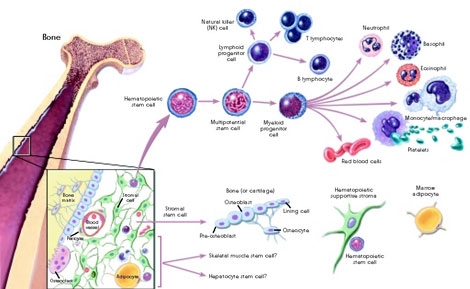
The stem cells the researchers are using are derived from the patient’s own bone marrow—which is a rich source of mesenchymal stem cells. These cells have the potential to ‘differentiate’ into other types of cells such as bone which can improve the process of healing. However, stem cells can also differentiate into cells which have no use in therapy. Artificially controlling the final outcome to ensure that the desired type of cells is created is very difficult.
Author
React:
Discussion
This is a fascinating development. In my practice we've seen similar outcomes with the revised protocol. The key differentiator seems to be patient selection criteria. Has anyone else noticed the correlation with BMI thresholds?
Great point. I'd push back slightly on the conclusion, the sample size in the cited study is too small to draw population-level inferences. That said, the directional signal is compelling and worth a larger RCT.
We implemented a similar approach last year. Early results are promising but we're still gathering 12-month follow-up data. Happy to share our protocol if anyone is interested.
Join the conversation
Orthopedic professionals are discussing this. Sign in and upgrade to read every comment and add your voice.