
Two surgeons, one from Minnesota and the other from Canada, have received the Orthopaedic Research and Education Foundation Prospective Clinical Research Grant for Spine Care. As reported by Laura Miller, writing for Becker’s Spine Review, David W. Polly, M.D., the chief of spine service at the University of Minnesota, is the Minnesota recipient. Polly has a professional interest in scoliosis and spinal tumors.
Polly and Parent Awarded AAOS Grant
1 min read Premium comments
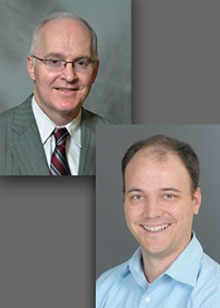
The Canadian recipient, Stefan Parent, M.D., is an assistant professor of medicine at the University of Montreal and completed his fellowship in paediatric orthopaedic and spine surgery at the University of California, San Diego.
This is Dr. Polly’s 16th award for his scientific work. In 2011 Dr. Polly received the Charles D. Ray Award for Best Clinical Paper-Radiographic Comparison of Lateral Fusion (LLIF) vs. ALIF vs. TLIF vs. Posterior Fusion: Analysis of Segmental Sagittal Contour Change, (SAS11). Dr. Polly is past winner of the White Cloud Award-Best Clinical Paper (co-author) International Meeting on Advanced Spine Techniques (IMAST), the Outstanding Paper, Resident/Fellow Award: 2003 Eastern Orthopaedic/Southern Orthopaedic Association Annual Meeting, Dublin, Ireland. Straight-Forward vs. Anatomic Trajectory of Thoracic Pedicle Screws: A Biomechanical Model (senior author).
Dr. Polly is a graduate of the Uniformed Services University of the Health Sciences Advanced studies which included a residency at Walter Reed Army Medical Center and a spine surgery fellowship at the University of Minnesota. Finally, Dr. Polly is lead author or co-author of more than 100 peer reviewed published scientific papers.
This is also Dr. Parent’s 16th grant or award for his research and scientific work. In addition to serving as
Assistant Professor, Faculty of Medicine, Department of Surgery, University of Montreal; Dr. Parent is also Chairholder, Depuy Spine Canada Inc.; Academic Research Chair in Spinal Deformities; CHU Sainte-Justine Research Center; and Deputy Head of the axis Musculoskeletal Diseases and Movement Sciences, Research Centre of CHU Sainte-Justine.
Author
React:
Discussion
This is a fascinating development. In my practice we've seen similar outcomes with the revised protocol. The key differentiator seems to be patient selection criteria. Has anyone else noticed the correlation with BMI thresholds?
Great point. I'd push back slightly on the conclusion, the sample size in the cited study is too small to draw population-level inferences. That said, the directional signal is compelling and worth a larger RCT.
We implemented a similar approach last year. Early results are promising but we're still gathering 12-month follow-up data. Happy to share our protocol if anyone is interested.
Join the conversation
Orthopedic professionals are discussing this. Sign in and upgrade to read every comment and add your voice.