
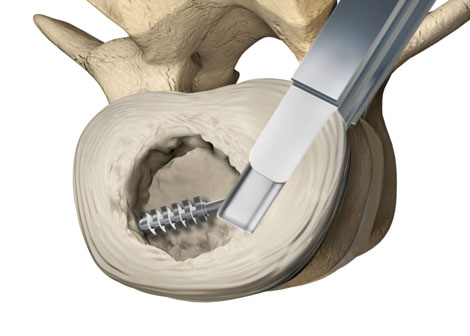
NLT SPINE is celebrating the announcement that its eSPIN powered discectomy system has received 510(k) clearance from the FDA. eSPIN is intended for use in cutting and grinding intervertebral disc material during discectomy for fusion procedures in L2-S1 spinal segments in skeletally mature patients with degenerative disc disease (DDD). DDD patients may also have up to Grade I spondylolisthesis or retrolisthesis at the involved levels. The device, together with PROW FUSION, is intended to be used with supplemental spinal fixation systems that have been cleared for use in the lumbosacral spine.
NLT SPINE: 510(k) Clearance for eSPIN
2 min read Premium comments
Secondary
The company indicates that eSPIN has shown significant disc evacuation in the contra-lateral side of the disc, 67% more disc volume removed compared to standard instruments, and 83% fewer instrument passes by the exiting nerve.
Asked about the development process, Didier Toubia, CEO of NLT SPINE told OTW,
There are many interesting challenges that were faced along the development process of the eSPIN device. Many scientific publications emphasize the importance of a proper disc preparation for fusion procedures and today’s tools and methods for disc preparation in lumbar interbody fusion procedures are not standardized, require an excessive amount of steps, involve numerous instrument passes by vital neural elements and result in inconsistent disc preparation for fusion. These were the key shortcomings that we focused on when developing the eSPIN device and I am happy to say that we have made significant improvements in each of these areas.
One important challenge was the design goal of developing a more consistent and repeatable method for preparation of the disc space for interbody fusion. The positioning of the eSPIN conduit predefines the actual area to be prepared inside the disc, which leads to a ‘volumetric’ discectomy covering both ipsilateral and contralateral sides. The actual width of the prepared disc surface reaches up to three times the annulotomy size required for using eSPIN.
“Another important point about the design of this system relates to the company’s goal to provide the surgeon with all the aspects of a lumbar interbody fusion procedure. This led us to the recognition that we needed a consistent inflexion point within the disc for both the eSPIN and the PROW FUSION lumbar interbody fusion implant, when used together. We achieved this with the conduit, which enables precise placement and inflexion of both of these devices within the interbody space. We often talk about our vision that this new method of performing spine surgery will be someday compared to what the catheter has done to revolutionize cardiovascular surgery.”
React:
Discussion
This is a fascinating development. In my practice we've seen similar outcomes with the revised protocol. The key differentiator seems to be patient selection criteria. Has anyone else noticed the correlation with BMI thresholds?
Great point. I'd push back slightly on the conclusion, the sample size in the cited study is too small to draw population-level inferences. That said, the directional signal is compelling and worth a larger RCT.
We implemented a similar approach last year. Early results are promising but we're still gathering 12-month follow-up data. Happy to share our protocol if anyone is interested.
Join the conversation
Orthopedic professionals are discussing this. Sign in and upgrade to read every comment and add your voice.