
K2M, Inc., has launched a retractor system that company President and CEO Eric Major says, addresses complex pathologies within a less invasive environment.
K2M Introduces Retractor System at SRS
1 min read Premium comments
Secondary
The company introduced the Serengeti Complex Spine Minimally Invasive Retractor System at the 47th Annual Meeting of the Scoliosis Research Society (SRS) in Chicago on September 5, 2012.
The company announcement states that the system brings K2M’s focus on complex spine and minimally invasive together into one system.
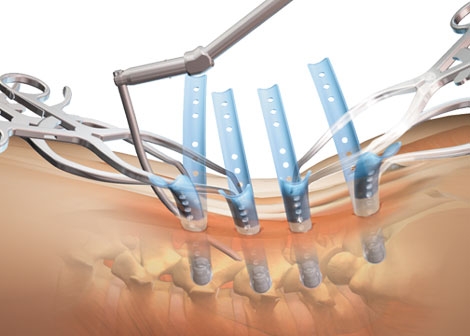
The system, according to the company, features “next generation instrumentation to perform complex reduction, controlled manipulation, and above-skin compression and distraction without compromising the option for direct visualization. The system provides the ability to attach and remove the minimally invasive reduction tunnels intraoperatively, combining the benefits of a traditional rigid system with the revolutionary benefits of the flexible, polymer Serengeti Retractor.”
Steven DeLuca, D.O., M.S., an orthopedic surgeon with the Orthopedic Institute of Pennsylvania, said that spinal surgery is dynamic and can change mid-course. He said the system, “allows for on-the-spot decision making, providing surgeons the option to attach or remove the reduction tunnels in-situ.”
The system features a screw-based method of retraction, allowing for a fixed position to the anatomy. “This simplified design allows for one-step, percutaneous placement of the screw and retractor, providing improved access for rod introduction, ” stated the company announcement.
Major stated, “This important advancement of our already well received [Serengeti system] serves as the intersection of our innovation efforts by combining our core competency in deformity with our award-winning minimally invasive technology…resulting in more options for surgeons.”
Author
React:
Discussion
This is a fascinating development. In my practice we've seen similar outcomes with the revised protocol. The key differentiator seems to be patient selection criteria. Has anyone else noticed the correlation with BMI thresholds?
Great point. I'd push back slightly on the conclusion, the sample size in the cited study is too small to draw population-level inferences. That said, the directional signal is compelling and worth a larger RCT.
We implemented a similar approach last year. Early results are promising but we're still gathering 12-month follow-up data. Happy to share our protocol if anyone is interested.
Join the conversation
Orthopedic professionals are discussing this. Sign in and upgrade to read every comment and add your voice.