
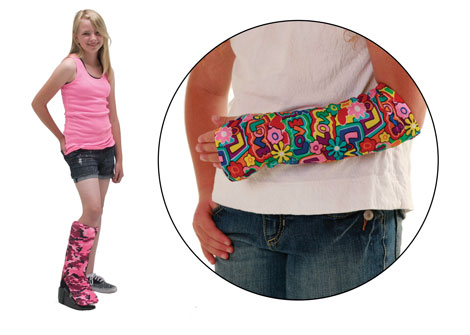
Scott Hoffinger, M.D. an orthopedic surgeon may have wanted more color and fun in his professional life! He signed on with CastCoverZ!—a manufacturer of designer-designed colored crutches and fashionable cast, brace, splint and walking boot covers. Hoffinger, who is Associate Chief of Pediatric Orthopaedics and Clinical Associate Professor of Stanford University Medical Center, Lucile Packard Children’s Hospital now also bears the title of CastCoverZ!’s medical advisor.s
Hoffinger Signs On With CastCoverZ!
1 min read Premium comments
Secondary
Hoffinger said,
When I first saw the CastCoverZ! products it was an instant ‘wow!’ It had that ‘why didn’t I think of that?’ feel.
“CastCoverZ! are colorful, adorable, fun products that also serve a great functional purpose. CastCoverZ! cast covers and crutch accessories replace the homegrown, often drab selection of washcloths and towels that usually cover the crutches, or the long sleeves and sweatshirts that are pulled down to hide the cast.”
Formerly the Director of Orthopedic Surgery for Oakland (CA) Children’s Hospital, Hoffinger was the country’s youngest board-certified orthopedic surgeon while completing his residency at Yale Medical Center. He was also the consulting orthopedic surgeon for the recently retired TLC reality show, “Little People, Big World” and served five times in Iraq as a front-line orthopedic surgeon.
The addition of a well-known children’s orthopedic surgeon to its staff will strengthen CastCoverZ!’s reputation for providing products that are fun, functional and helpful to patients recovering from orthopedic surgery, according to a statement by the company.
CastCoverZ! has been featured in numerous venues including Yahoo!, Good Day Sacramento, Entrepreneur, Parenting Magazine, About.com, Mom Invented, Orthopedics This Week, Lower Extremity Review, Kidz World and Newsday. Products are currently available at select orthopedic surgeon offices, pharmacies, or direct at www.CastCoverZ.com.
Author
React:
Discussion
This is a fascinating development. In my practice we've seen similar outcomes with the revised protocol. The key differentiator seems to be patient selection criteria. Has anyone else noticed the correlation with BMI thresholds?
Great point. I'd push back slightly on the conclusion, the sample size in the cited study is too small to draw population-level inferences. That said, the directional signal is compelling and worth a larger RCT.
We implemented a similar approach last year. Early results are promising but we're still gathering 12-month follow-up data. Happy to share our protocol if anyone is interested.
Join the conversation
Orthopedic professionals are discussing this. Sign in and upgrade to read every comment and add your voice.