
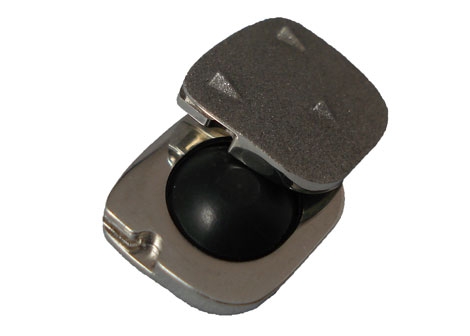
OSIMPLANT has announced that it will use MOTIS polymer (from Invibio Biomaterial Solutions) for its CE marked ARAMIS cervical disc prosthesis. This device is the first to incorporate an inlay made from carbon fiber-reinforced MOTIS polymer.
Disc Design Incorporates MOTIS Polymer
1 min read Premium comments
Secondary
According to OSIMPLANT General Manager Mr. Özcan Karadag, the high performing, versatile biomaterial provides new options in articulating devices. This is due to the combination of mechanical strength, creep resistance and wear performance. Designed to minimize patient pain and combat such spinal degenerative diseases as spondylosis and herniated nucleus pulposus, ARAMIS relies on MOTIS’ superior performance properties to advance patient and surgeon benefits. The design of its MOTIS-enhanced inlay, for example, significantly reduces wear rate between the inlay and endplates, thereby prolonging the service life of the implant.
Mr. Karadag said in the September 2012 news release, “During the development phase we considered alternative materials, such as polyethylene and ceramic. Ultimately, however, we selected MOTIS. MOTIS provides a wide range of technological and application benefits that exceed the performance attributes of traditional materials. The proven benefits — including improved load bearing capabilities and extremely low wear-rate results against hard counterfaces, such as metal — indicate the effectiveness of MOTIS as an alternative to ceramics and UHMWPE [ultra-high-molecular-weight polyethylene] in total disc arthroplasty.”
Gilles Larroque, European Spine Marketing Leader at Invibio, told OTW,
With the current material challenges in arthroplasty, orthopedists are going to be cautiously interested in new material combinations such as the unique polymer and metal combination for this cervical disc prosthesis. The three component device utilizes MOTIS in the inlay and cobalt chrome in the endplates. MOTIS exceeds industry and clinicians’ requirements, mainly in terms of wear debris, friction ratio, mechanical strength and creep resistance which allows for thinner, bone conserving implants whilst offering a cost efficient manufacturing process. It also meets their material expectations due to the proven biocompatibility and biostability of MOTIS.
React:
Discussion
This is a fascinating development. In my practice we've seen similar outcomes with the revised protocol. The key differentiator seems to be patient selection criteria. Has anyone else noticed the correlation with BMI thresholds?
Great point. I'd push back slightly on the conclusion, the sample size in the cited study is too small to draw population-level inferences. That said, the directional signal is compelling and worth a larger RCT.
We implemented a similar approach last year. Early results are promising but we're still gathering 12-month follow-up data. Happy to share our protocol if anyone is interested.
Join the conversation
Orthopedic professionals are discussing this. Sign in and upgrade to read every comment and add your voice.