
People at DFINE, Inc., say they have a therapy which allows physicians to provide patients with rapid pain relief from metastatic spinal tumors in a single, minimally invasive treatment.
DFINE Offers Spinal Tumor Pain Relief
1 min read Premium comments
Secondary
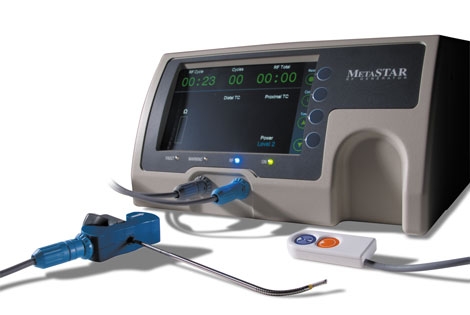
On September 18, the company announced the commercial release of the device for that treatment, the STAR Tumor Ablation System.
According to the company statement, the STAR System was developed specifically for the palliative treatment of metastatic vertebral body tumors, which have historically been difficult to access and treat given the unique anatomy of the spine. t-RFA (targeted Radiofrequency Ablation) is typically an outpatient procedure and can be performed using local anesthesia through a small incision. A small steerable device is placed into the vertebra in a minimally invasive manner. The physician can target precisely where the device’s energy is delivered with the intent to heat and destroy the metastatic spinal tumor cells to alleviate pain while minimizing damage to surrounding tissues and vital structures. In most cases t-RFA provides pain relief in a single treatment.
Since beginning a phased launch in March 2012, the company statement notes a rapid adoption of the STAR System. More than 140 patients have been treated at 48 facilities throughout the U.S. “The system has performed to expectation, and procedures have resulted in excellent clinical outcomes, ” states the announcement.
“We have been extremely satisfied with the results we have achieved with the STAR System. Patients who were in severe pain have experienced significant pain relief and have been able to return to a better quality of life almost immediately following the procedure, ” said Jerry Chang, M.D., interventional radiologist, Eisenhower Medical Center. “Not only is it possible to achieve rapid pain relief with t-RFA, but it is also compatible with systemic therapies to treat the primary cancer, including both chemo and radiation therapies.”
“The full commercial launch represents a key milestone for DFINE, as it fulfills the vision of extending our technology platform with a second procedure to serve the large population of patients suffering from painful spinal metastases, ” said Kevin Mosher, CEO of DFINE.
Author
React:
Discussion
This is a fascinating development. In my practice we've seen similar outcomes with the revised protocol. The key differentiator seems to be patient selection criteria. Has anyone else noticed the correlation with BMI thresholds?
Great point. I'd push back slightly on the conclusion, the sample size in the cited study is too small to draw population-level inferences. That said, the directional signal is compelling and worth a larger RCT.
We implemented a similar approach last year. Early results are promising but we're still gathering 12-month follow-up data. Happy to share our protocol if anyone is interested.
Join the conversation
Orthopedic professionals are discussing this. Sign in and upgrade to read every comment and add your voice.