
Horizon Healthcare Services, Inc., New Jersey’s largest and oldest health insurer, has agreed to provide reimbursement for Kimberly-Clark’s SIngergy Cooled Radiofrequency System. The policy covers sacroiliac joint denervation for patients diagnosed with chronic sacroiliac joint (SIJ) pain. The procedure temporarily destroys the nerve endings to the sacroiliac joint.
Cooled Radiofrequency Procedure Coverage in NJ
1 min read Premium comments
Secondary
A Kimberly-Clark press release stated that approximately four out of five adults in the U.S. will experience chronic axial low back pain, and SIJ pain accounts for between 18% and 30% of that. This number, claims the company, converts to Americans spending at least $50 billion each year on low back pain, making it the most common cause of job-related disability and a leading contributor to missed work.
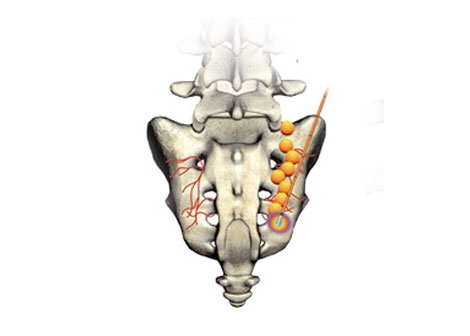
The procedure is a minimally-invasive treatment intended to target and treat the pain-generating nerves in the lower back and buttock region that may be responsible for SIJ pain. The treatment can significantly reduce low back pain, according to the company.
Additionally, the company says results of a study published in the March edition of Pain Medicine showed that slightly more than half of patients treated with the procedure demonstrated significant improvements in pain, disability and quality of life outcomes. The durability of the relief was also maintained at the nine-month follow-up.
The Pain Medicine study compared lateral branch neurotomy using cooled radiofrequency to a sham intervention. Lateral branch neurotomy involved the use of cooled radiofrequency electrodes to ablate the S1–S3 lateral branches and the L5 dorsal ramus. The sham procedure was identical to the active treatment, except that radiofrequency energy was not delivered.
Study authors, Nilesh Patel M.D., Andrew Gross M.D., Lora Brown M.D. and Gennady Gekht M.D., reported statistically significant changes in pain, physical function, disability, and quality of life were found at three-month follow-up, with all changes favoring the lateral branch neurotomy group. At three-month follow-up, 47% of treated patients and 12% of sham subjects achieved treatment success. At six and nine months, respectively, 38% and 59% of treated subjects achieved treatment success.
Author
React:
Discussion
This is a fascinating development. In my practice we've seen similar outcomes with the revised protocol. The key differentiator seems to be patient selection criteria. Has anyone else noticed the correlation with BMI thresholds?
Great point. I'd push back slightly on the conclusion, the sample size in the cited study is too small to draw population-level inferences. That said, the directional signal is compelling and worth a larger RCT.
We implemented a similar approach last year. Early results are promising but we're still gathering 12-month follow-up data. Happy to share our protocol if anyone is interested.
Join the conversation
Orthopedic professionals are discussing this. Sign in and upgrade to read every comment and add your voice.