
Warsaw-based Zimmer Holdings, Inc. and Boston-based Genzyme Corp have been in a Boston federal court for the last year fighting over the patent for hyaluronic acid injection treatments for arthritic knees.
Zimmer Kills Genzyme’s Synvisc Patent
1 min read Premium comments
Secondary
On August 3, 2012, a jury ruled in Zimmer’s favor.
Dueling FDA Approvals
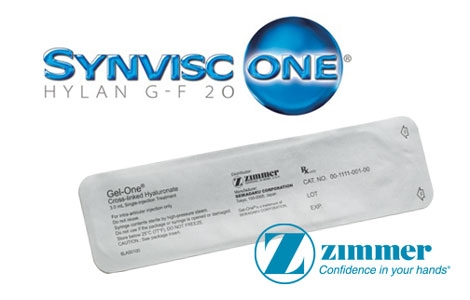
Genzyme’s Synvisc was approved by the FDA in August 1997 and Synvisc-One was approved in February, 2009. Zimmer’s Gel-One, manufactured by Tokyo-based Seikagaku was approved by the FDA in March 2011. Both products, according to the FDA, are hyaluronate hydrogels produced from chicken combs, in a phosphate-buffered saline solution.
Gel-One is designed as a single injection treatment to reduce pain associated with osteoarthritis of the knee for up to 13 weeks. Synvisc-One is designed as a single intra-articular injection option to reduce pain associated with osteoarthritis of the knee for up to 26 weeks.
Until Gel-One, Genzyme’s Synvisc-One was the only single-injection treatment approved by the FDA.
Within a month of Zimmer’s March 2011 FDA approval, Genzyme filed a patent infringement suit against Zimmer in Boston. On December 30, 2011, U.S. District Judge Douglas Woodlock issued an order to prevent Zimmer from selling its product at a price less than $547.60 or giving out free samples and undercutting the price of Synvisc-One.
Zimmer Victory and Patent Invalidation
The jury trial ended in a victory for Zimmer as the jury found that Zimmer’s Gel-One does not infringe Genzyme’s U.S. patent number 7, 931, 030: “Regiments for Intra-Articular Viscosupplementation” by Francois Bailleul and assigned to Genzyme, Inc. The patent was filed in December 2005 and was granted in April 2011.
It gets worse for Genzyme. The jury also ruled that the patent is invalid because it covered obvious variations of earlier work. After the jury verdict, the judge vacated his December order.
Sales of Synvisc and Synvisc-One have been good for Genzyme’s parent, Paris-based Sanofi. According to a Bloomberg report, the product had sales of $228 million the first half of the year, up 8.9% over the year-earlier period.
Author
React:
Discussion
This is a fascinating development. In my practice we've seen similar outcomes with the revised protocol. The key differentiator seems to be patient selection criteria. Has anyone else noticed the correlation with BMI thresholds?
Great point. I'd push back slightly on the conclusion, the sample size in the cited study is too small to draw population-level inferences. That said, the directional signal is compelling and worth a larger RCT.
We implemented a similar approach last year. Early results are promising but we're still gathering 12-month follow-up data. Happy to share our protocol if anyone is interested.
Join the conversation
Orthopedic professionals are discussing this. Sign in and upgrade to read every comment and add your voice.