
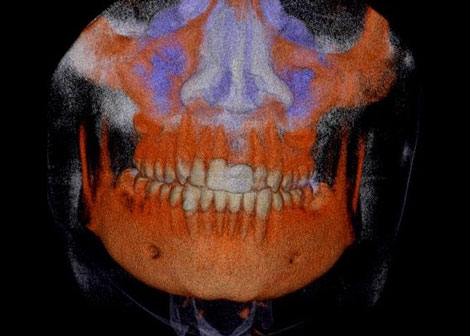
In the first human study of its kind, researchers found that using stem cells to re-grow craniofacial tissues, mainly bone, was faster and more effective than traditional bone regeneration treatments. Three institutions, the University of Michigan School of Dentistry, the Michigan Center for Oral Health Research and Ann Arbor-based Aastrom Biosciences Inc., partnered in the clinical trial which involved 24 patients who needed jawbone reconstruction after tooth removal.
Stem Cells Excel in Jawbone Reconstruction
1 min read Premium comments
Secondary
According to a July 31 ENews Park Forest press release, which reported the study, patients either received experimental tissue repair cells or traditional guided bone regeneration therapy. The tissue repair cells, called ixmyelocel-T, are under development at Aastrom, a spinout company from the University of Michigan.
At 6 and 12 weeks following the experimental cell therapy treatment, patients in the study received dental implants. Patients who received tissue repair cells had greater bone density and quicker bone repair than those who received traditional guided bone regeneration therapy. Also, the experimental group needed less secondary bone grafting when getting their implants.
The cells used for the therapy were extracted from bone marrow taken from the patient’s hip. It was processed using Aastrom’s proprietary system, which allows many different cells to grow, including stem cells. Stem cell soaked sponges were placed into different areas of the patients’ mouths and jaws to stimulate bone growth.
Researchers indicated that stem cell therapies are still probably 5-10 years away from being used regularly to treat oral and facial injuries and defects. The next step, they say, is to perform more clinical trials that involve larger craniofacial defects in a larger number of patients.
Author
React:
Discussion
This is a fascinating development. In my practice we've seen similar outcomes with the revised protocol. The key differentiator seems to be patient selection criteria. Has anyone else noticed the correlation with BMI thresholds?
Great point. I'd push back slightly on the conclusion, the sample size in the cited study is too small to draw population-level inferences. That said, the directional signal is compelling and worth a larger RCT.
We implemented a similar approach last year. Early results are promising but we're still gathering 12-month follow-up data. Happy to share our protocol if anyone is interested.
Join the conversation
Orthopedic professionals are discussing this. Sign in and upgrade to read every comment and add your voice.