
Regenerative medicine is the holy grail of orthopedics. The promise of stem cell therapies to preserve joints instead of replacing them has the potential to change the face of orthopedic medicine from a joint replacement business to a joint preservation business.
Stem Cell Therapies: Clinical Practice or Drug?
7 min read Premium comments
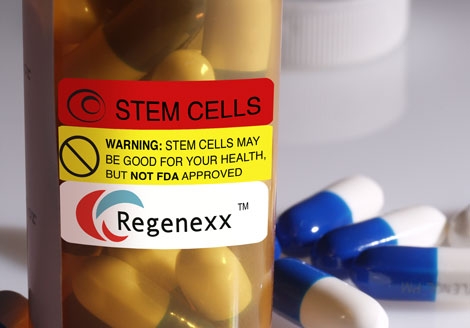
The question of how and by whom this promising technology should be regulated has been playing out in a drama in a Washington, D.C. courtroom, a lab in Colorado and a clinic on the Grand Cayman Islands. The final outcome may well tell us whether the promise of this regenerative medicine will find its home in the U.S. or overseas.
Regulation or Practice?
Simply stated, do stem cells removed from a patient, cultured and returned to the same patient become a “drug” under the regulatory authority of the U.S. Food and Drug Administration (FDA) and become regulated like drugs manufactured by large pharmaceutical companies?
Or, does the minimal manipulation of stem cells fall under the practice of medicine and remain regulated by state laws, institutional review boards and malpractice lawsuits?
On July 23, 2012, that question was answered (for now) in favor of federal regulation when a federal judge issued a ruling in the long standing struggle between the FDA and a couple of pain docs from the Centeno-Schultz Clinic in Colorado who founded Regenerative Sciences, LLC.
Regenexx Procedure

Centeno Schultz ClinicChristopher Centeno, M.D. and John Schultz, M.D., are the developers of the Regenexx Procedure. The procedure is a non-surgical treatment where a physician takes bone marrow and blood samples from a patient, cultures the cells and injects them back into the same patient. The treatment is intended to treat joint, muscle, tendon and bone pain. The physicians developed the procedure after learning of clinical studies showing the benefits of stem cell therapies and seeing results in horses in Colorado.
A small bone marrow sample is taken from the back of a patient’s hip through a needle and blood samples are taken from a vein. These samples are sent to the Regenerative laboratory just a few miles from the physicians’ clinic where the mesenchymal stem cells (MSCs) are isolated from the bone marrow and then grown to greater numbers. This process uses the natural growth factors found in the patient’s blood to grow the MSCs. After approximately two weeks, the expanded stem cells are sent to the University of Colorado affiliated Colorado Genetics Laboratory for testing.
Once the cells pass quality assurance testing, they are placed back into the patient’s injured area (i.e., knee, hip, rotator cuff), typically four to six weeks after they were removed. The stem cells, Centeno believes, then begin to repair the patient’s degenerated or injured area. The repair process usually takes between three to six months but many patients demonstrate marked improvement within one to three months.
FDA Intervenes
On July 25, 2008, the FDA notified Regenerative that the agency believed that the cell product used in the Regenexx procedure constituted a drug. After a couple of years of lawsuits and countersuits, the parties agree to consolidate the arguments into one case.
The FDA argued that the Regenexx procedure is a drug under the Federal Food, Drug, and Cosmetic Act and must therefore only be performed pursuant to a New Drug Application and under current Good Manufacturing Practices (CGMP).
U.S. Federal District Court Judge Rosemary Collyer, in an admittedly close call, sided with the FDA and federal oversight.
FDA Fails to Promote Public Health
The company argues that requiring physicians to follow the same regulatory scheme that drug manufacturers who are manufacturing and distributing by the millions must use, will snuff out innovation of promising technologies in the U.S. and drive patients overseas to receive treatment. The FDA will fail in its mission to promote public health. In fact, during the lengthy legal battle with the FDA and after agreeing to discontinue offering the procedure until the Court decided the argument, the physicians opened a clinic on the Grand Cayman Islands to treat patients with the Regenexx procedure.
The Court’s Ruling
Here’s what the Court said: “It is a close question but ultimately the Court concludes that the Regenexx Procedure is subject to FDA enforcement because it constitutes a ‘drug’ and because [it includes] a drug that has been shipped in interstate commerce [and] used in the solution through which the cultured stem cells are administered to patients.”
“The cultured cell product is a drug within the meaning of the Federal Food, Drug, and Cosmetic Act, 21 U.S.C. § 321(g) (“FDCA”) and a biological product within the meaning of 42 U.S.C. § 262. The Court also ruled the company was guilty of, “adulteration and misbranding of the cultured cell product within the meaning of 21 U.S.C. §§ 351(a)(2)(B), 352(f)(1) and 353(b)(4), while it is held for sale after shipment of one or more of its components in interstate commerce.”
Alliance for Regenerative Medicine: “Court Got It Right”
While many orthopedic surgeons involved in stem cell research and treatments we spoke to for this article sided firmly with Dr. Centeno and the company. Others involved in the stem cell industry thought the FDA got it right.
Michael Werner is the Executive Director of the Alliance for Regenerative Medicine (ARM) and partner with the law firm of Holland & Knight, LLP.
ARM is an advocacy organization operating in Washington, D.C. to specifically represent the interests of the companies, research institutions, investors, and patient groups that comprise, according to the association, the entire regenerative medicine community. Members include Johnson & Johnson, AlloSource, Aastrom Biosciences, Inc., Cytori Therapeutics, Inc., Genzyme Corporation and over 100 other companies; academic institutions such as Wake Forest Institute of Regenerative Medicine; and patient advocacy groups such as the Juvenile Diabetes Research Foundation.

Christopher Centeno, M.D.Werner told us on August 16, that the Court got it right and the FDA rules in place make sense. “If a physician is significantly altering a cellular product and is changing the biological use for which it was originally intended, the FDA needs to regulate it just like any other drug. There must be standards and they must be enforced.”
He doesn’t believe anyone is trying to do anything nefarious and though sympathetic to the difficulty of doing clinical trials on “one-off” procedures, he maintains that research and regulation are fundamental to patient safety and industry growth. “Everything can’t be a one-off. Patients need to know that the processes and procedures their physicians are following when manipulating their cells before returning them to their bodies are safe and FDA approved.”
Dr. Centeno told us ARM represent the companies trying to commercialize these technologies, so without patent protection, the only way to get market barrier to entry is FDA approval.
Another FDA Precedent
“The interesting thing is that this is the first time FDA has concerned itself in a ‘one-off’ therapy. The only existing model to compare this to is a five-day blastocyst procedure being performed as part of IVF fertility treatments. This is practice of medicine without FDA approval and doesn’t follow drug mass manufacture guidelines and drug approvals; instead it uses guidelines designed for this purpose that were promulgated by the College of American Pathologists. In addition, when asked if this position of applying drug standards to cultured cells made any medical or public health common sense, every big player in the late 1990s said no. In essence, this position ensures that physicians will never be able to have a place in this innovation pathway as it will remain the sole domain of pharma producing mass produced solutions, ” said Dr. Centeno.
One of the big players Dr. Centeno is referring to is the American Society of Clinical Oncology (ASCO), America’s cancer docs.
In 1997 the FDA proposed the rule requiring establishment registration and listing of products for manufacturers of human cellular products. In August 1998 ASCO responded with the following:
ASCO objects in the strongest terms to FDA’s proposed regulation of stem cell transplants. This misguided proposal is unnecessary, would jeopardize the proper treatment of cancer patients and impede the development of new therapies, would substantially increase the cost of stem cell transplants, and exceeds FDA’s legal authority.
Stem cell transplants are medical procedures. Their use is the practice of medicine, not the manufacturing of biological products as FDA asserts. Transplantation procedures and their associated stem cells do not in any way resemble the products that FDA is chartered to regulate.
The Society pointed to bone marrow transplants that have been performed since 1971 and have been standard therapy for certain conditions since the late 1970s.
The principle concerns cited by FDA in support of the new regulatory apparatus are preventing the transmission of communicable diseases and assuring that stem cell procedures are safe and effective. But FDA has adduced no evidence whatever to suggest that communicable diseases are presently being transmitted through stem cell procedures or that stem cell transplants are unsafe or ineffective.
Texas Secession
Regenerative isn’t the only company that has gotten crossways with the FDA.
In Texas, Celltex Therapeutics Corporation is currently engaged in the same argument with the FDA over its procedure, licensed from a South Korean company. Celltex became part of this year’s Republican Presidential primary story when Texas Governor Rick Perry announced that he had his own stem cells harvested and injected into his aching back.
Perry later pushed a bill making the company the only state-approved stem-cell bank and led the Texas Medical Board to institute rules allowing the therapy to go ahead. On April 13, 2012, Texas became the first state with its own policy imposing oversight on the medical use of experimental treatments using adult stem cells
“No Clinical Practice Beyond FDA’s Reach”
The Court’s decision rankled Scott Gottlieb, a former Deputy FDA Commissioner under George W. Bush.
Gottlieb and a colleague wrote in an editorial in The Wall Street Journal after the ruling that, “Federal regulators have stretched that definition [of a drug] to the point where a reasonable limit no longer exists. The law provided a clear impediment to unrestrained exercise of FDA authority. Something needed to be an “article”—not a medical procedure—in order to become a drug. The constraint that a drug needed to be a “thing” has been read out of the law by FDA, and the district court appears to have accepted that position.”
“If the FDA’s victory is upheld on appeal, then conceivably nothing done as part of clinical practice is beyond the agency’s reach, ” concluded Gottlieb.
We’re not done with this story. We think this case has the potential to be a landmark case that will define how stem cell therapies and regenerative medicine will be developed in the U.S.—or elsewhere. Stay tuned.
Author
React:
Discussion
This is a fascinating development. In my practice we've seen similar outcomes with the revised protocol. The key differentiator seems to be patient selection criteria. Has anyone else noticed the correlation with BMI thresholds?
Great point. I'd push back slightly on the conclusion, the sample size in the cited study is too small to draw population-level inferences. That said, the directional signal is compelling and worth a larger RCT.
We implemented a similar approach last year. Early results are promising but we're still gathering 12-month follow-up data. Happy to share our protocol if anyone is interested.
Join the conversation
Orthopedic professionals are discussing this. Sign in and upgrade to read every comment and add your voice.