
It is the same idea as the non-stick frying pan—but this coating keeps bacteria from sticking to medical instruments. Researchers at the University of Nottingham tested a new class of bacteria-resistant polymers on the surfaces of medical instruments and found that they, very effectively, repelled bacteria.
Non-Stick Coating Keeps Bacteria at Bay
1 min read Premium comments
Secondary
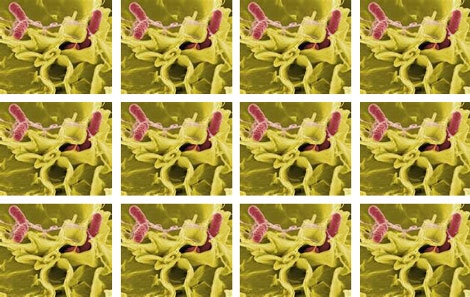
The formation of slimy “biofilms” results when microbes pack together into dense communities. British and U.S. scientists found that the new class of materials prevented the bacterial build-up by more than 96% when compared to commercial silver coatings. According to a 2002 study by the U.S. National Institutes of Health, sticky biofilms account for more than 80% of microbial infections in the body.
It took equipment provided by the Massachusetts Institute of Technology to screen thousands of materials at the same time that enabled the researchers to identify new materials that had the right bacteria-fighting properties. Morgan Alexander, with the University of Nottingham’s School of Pharmacy, credited the MIT team with developing the technology that allowed researchers to narrow the search for the new class of polymers.
“We could not have found these materials using the current understanding of bacteria-surface interactions, ” he said in an August 14 press release. “The technology developed with the help of MIT means that hundreds of materials could be screened simultaneously to reveal new structure-property relationships.” Alexander noted that medical devices are often given toxic coatings to kill bacteria, and that materials such as silicone rubber were not designed as biomedical materials.
The research team published the full findings in the latest edition of the academic journal Nature Biotechnology.
Author
React:
Discussion
This is a fascinating development. In my practice we've seen similar outcomes with the revised protocol. The key differentiator seems to be patient selection criteria. Has anyone else noticed the correlation with BMI thresholds?
Great point. I'd push back slightly on the conclusion, the sample size in the cited study is too small to draw population-level inferences. That said, the directional signal is compelling and worth a larger RCT.
We implemented a similar approach last year. Early results are promising but we're still gathering 12-month follow-up data. Happy to share our protocol if anyone is interested.
Join the conversation
Orthopedic professionals are discussing this. Sign in and upgrade to read every comment and add your voice.