
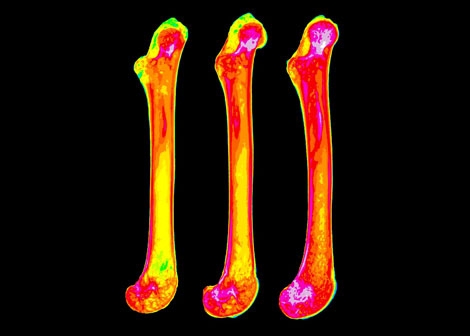
Researchers from the UK have put some special mice to work…and found nine new genes that had never before been implicated in skeletal disorders. The team, led by researchers at Imperial College London, undertook a collaborative study of the mineral content, strength and flexibility of bones. The study involved 100 mutant mouse lines, and is the largest reported screen of its type for genes that regulate bone health. The Sanger Institute Mouse Genetics Projects generated the mice strains used in the study.
Nine New Genes for Bone Health!
2 min read Premium comments
Secondary
“We are developing new ways of finding genes that are essential for normal development of the skeleton, and which maintain the structure and integrity of bone during adulthood. These genes will provide new understanding of the mechanisms responsible for bone diseases and may ultimately lead to the development of new treatments, ” explained Professor Graham Williams, senior author from Imperial College London, in the August 2, 2012 news release. “We collaborated with outstanding colleagues at the Sanger Institute and several Universities. Our studies span many areas of expertise and we have developed a detailed and specific rapid-throughput system to screen bones from mice that lack a single gene. This strategy makes use of existing shared resources at Sanger and greatly reduces the number of mice required.”
This study demonstrates that the loss of function in these genes can disrupt the structure and composition of bone. This disruption can be classified into three distinct, different categories:
-
weak and flexible bone with low mineral content similar to postmenopausal osteoporosis
weak and brittle with low mineral content similar to osteogenesis imperfecta
high bone mass which is rare in humans.
Duncan Bassett of the Imperial College London told OTW,
There are a number of important messages for orthopedists that could be highlighted. Osteoporosis is a global healthcare priority and although we know there is a major genetic component to the disease, its genetic basis still remains largely unknown. We developed a new, highly efficient skeletal screening approach and analysed 100 unselected mouse strains, with single gene deletions, generated by the Wellcome Trust Sanger Institute. This strategy identified strains with both high and low bone mass characteristics, similar to that seen in people with certain bone diseases, and nine new genes that regulate bone strength. Using unbiased, multi-parameter screening to look for the physical characteristics of unhealthy bones in mice has the power to identify many of the major genes that determine bone strength and has the potential to identify new therapeutic targets for the treatment of osteoporosis.
React:
Discussion
This is a fascinating development. In my practice we've seen similar outcomes with the revised protocol. The key differentiator seems to be patient selection criteria. Has anyone else noticed the correlation with BMI thresholds?
Great point. I'd push back slightly on the conclusion, the sample size in the cited study is too small to draw population-level inferences. That said, the directional signal is compelling and worth a larger RCT.
We implemented a similar approach last year. Early results are promising but we're still gathering 12-month follow-up data. Happy to share our protocol if anyone is interested.
Join the conversation
Orthopedic professionals are discussing this. Sign in and upgrade to read every comment and add your voice.