
Medtronic, Inc. has officially opened an Innovation Center in Shanghai, China.
Medtronic Opens Chinese Innovation Center
1 min read Premium comments
Secondary
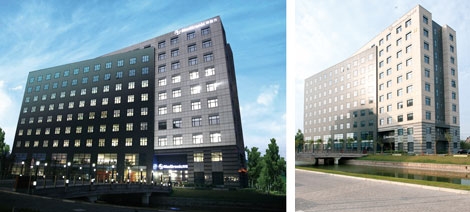
In an August 27 announcement, the company said the new facility, located in the company’s China headquarters and the first outside the U.S. and Europe, “represents the company’s initial step in creating local product research and development in China.” The Center will work closely with Medtronic’s global research and development teams, as well as local universities and research institutions.
More importantly, said Medtronic Chairman and CEO Omar Ishrak, the Center will allow the company to partner with Chinese physicians to create innovative solutions for patients. “It allows us a unique opportunity to leverage local talent and expertise to increase our growth in China and link it to our larger global capabilities, ” said Ishrak.
Medtronic Greater China is headquartered in Shanghai and has business operations at mainland, Hong Kong and Taiwan offices. Medtronic opened its first office and built a pacemaker assembly line at Shanghai Zhangjiang High Tech Park in 1996. In 2008, Medtronic made a 15% equity investment in Weigao Group, a local leading medical device company, and formed a joint venture with Weigao. In August 2010, Medtronic opened the company’s first patient care center in Beijing, China,
The Weigao joint venture markets China Medtronic’s spinal products and Weigao’s orthopedic products which include therapies for the hip, shoulder, spine and trauma.
Ishrak has said globalization is a key strategy and driver of growth for Medtronic. “We have already accelerated our efforts to expand in emerging markets, including China, through additional investments in people and infrastructure, and the Shanghai Innovation Center is an example of our work to transform ourselves into a truly global organization.”
The company press release noted that China has become the fastest growing region among all the emerging economies. To serve the ever-growing Chinese healthcare sector, Medtronic will hire and train an additional 1000 skilled staff over the next five years, hundreds of which will work toward the development of new medical technologies within the Innovation Center.
Author
React:
Discussion
This is a fascinating development. In my practice we've seen similar outcomes with the revised protocol. The key differentiator seems to be patient selection criteria. Has anyone else noticed the correlation with BMI thresholds?
Great point. I'd push back slightly on the conclusion, the sample size in the cited study is too small to draw population-level inferences. That said, the directional signal is compelling and worth a larger RCT.
We implemented a similar approach last year. Early results are promising but we're still gathering 12-month follow-up data. Happy to share our protocol if anyone is interested.
Join the conversation
Orthopedic professionals are discussing this. Sign in and upgrade to read every comment and add your voice.