
K2M, Inc. has a new neuromonitoring system for the company’s Ravine Lateral Access System.
K2M Adds Ravine Neuromonitoring
1 min read Premium comments
Secondary
On August 16, 2012, the company announced a partnership with Cadwell Laboratories, Inc., a manufacturer and marketer of diagnostic and monitoring products for neurophysiology, “to provide a neuromonitoring solution” for the Ravine system.
The announcement was made on the first day of the 2012 World Congress of Minimally Invasive Spine Surgery and Techniques (WCMISST) Conference in Bahia, Brazil.
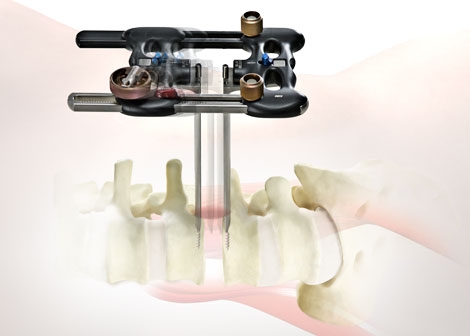
According to the company, the Ravine system is a flat blade platform providing rigid fixation to the patient, which offers enhanced access control for the surgeon. K2M’s dissectors are designed to be compatible with the Cadwell technologies to facilitate Ravine’s less disruptive muscle splitting transpsoas approach. The Cadwell Probe System is fully integrated into Ravine and can be used after retractor placement, fitting down the channels of the lateral blades for further monitoring.
“K2M’s partnership with Cadwell will enable them to offer a complete neuromonitoring solution for their Ravine Lateral Access System, ” stated Dr. Faheem Sandhu, neurosurgeon and Associate Professor at Georgetown University Hospital. “These new additions will prove to be very helpful in putting neuromonitoring control into the surgeon’s hands.”
Eric Major, K2M’s president and CEO, said the company’s rapid growth is allowing continued investments in new technology advancements and partnerships and the neuromonitoring solution will enable the company to provide surgeons with more intra-operative options.
Author
React:
Discussion
This is a fascinating development. In my practice we've seen similar outcomes with the revised protocol. The key differentiator seems to be patient selection criteria. Has anyone else noticed the correlation with BMI thresholds?
Great point. I'd push back slightly on the conclusion, the sample size in the cited study is too small to draw population-level inferences. That said, the directional signal is compelling and worth a larger RCT.
We implemented a similar approach last year. Early results are promising but we're still gathering 12-month follow-up data. Happy to share our protocol if anyone is interested.
Join the conversation
Orthopedic professionals are discussing this. Sign in and upgrade to read every comment and add your voice.