
A task force convened by the American Society for Bone and Mineral Research is sounding the alarm with regard to preventing second fractures. They are calling on health care providers to be proactive in identifying and providing care for patients who have suffered their first osteoporosis-related fracture, in order to prevent subsequent fractures. They are advocating for the use of a system of patient care coordination called “fracture liaison services” that research has shown to significantly improve follow-up assessment and treatment after an initial fracture occurs. The most significant barrier to widespread use of the model is the lack of insurance coverage, according to the task force report, which appears online in the Journal of Bone and Mineral Research.
How to Prevent Second Fractures
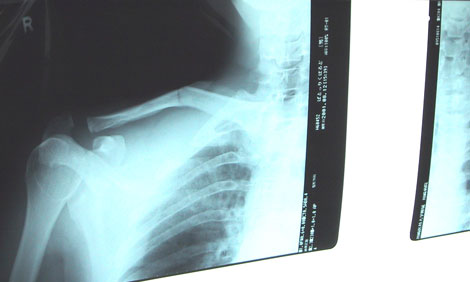
“Fractures beget fractures and lead to untold suffering. Our task force looked at ways to break this vicious cycle, ” said Ethel S. Siris, M.D., co-chair of the task force, in the July 26, 2012 news release. “We learned what works and what doesn’t. The research is clear: fracture liaison services are saving suffering, and they are saving money.”
The task force report outlines the evidence supporting widespread implementation of and insurance coverage for fracture liaison services after a patient over age 50 experiences a bone fracture. Currently however, insurers rarely pay for coordination of care related to the services of a fracture liaison service coordinator who arranges for follow up care.
Dr. Siris told OTW,
The idea is that the person on the team identified to do this work—perhaps a nurse or nurse practitioner—meets every patient over 50 in a given facility who is admitted to the orthopedic service. If it’s through the emergency room, then if the nurse hasn’t seen them in the ER she or he will do so soon after. You connect with that person while they are still having their fracture fixed, educating them about osteoporosis, calcium, and Vitamin D. You order labs and do a bone density test when the person returns for follow-up orthopedic care. Then you transmit that information to the individual who will be responsible for medically managing the case—the idea being to prevent a future fracture. This medical manager also follows up thereafter to verify that the patient is taking the prescribed medication…and if they are not then find out why and get them on something they will take.
Discussion
This is a fascinating development. In my practice we've seen similar outcomes with the revised protocol. The key differentiator seems to be patient selection criteria. Has anyone else noticed the correlation with BMI thresholds?
Great point. I'd push back slightly on the conclusion, the sample size in the cited study is too small to draw population-level inferences. That said, the directional signal is compelling and worth a larger RCT.
We implemented a similar approach last year. Early results are promising but we're still gathering 12-month follow-up data. Happy to share our protocol if anyone is interested.
Join the conversation
Orthopedic professionals are discussing this. Sign in and upgrade to read every comment and add your voice.