
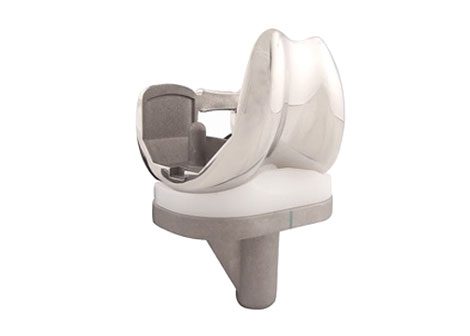
The Freedom Total Knee System, produced by Maxx Medical, Pvt. Ltd., has received approval from the Chinese State Food and Drug Administration (SFDA) for sale throughout China. The Freedom Knee is a high-flexion primary knee replacement system specifically engineered to address the market need for smaller sized and differently proportioned implants that, company officials believe, better support Asian lifestyle and physiology.
Freedom High Flexion Knee Approved For China Market
1 min read Premium comments
Secondary
“We’re excited to bring the benefits of Freedom Knee to surgeons and patients throughout China. There was a need for new joint replacement solutions developed to accommodate population-specific nuances, particularly in Asia, where retro-fit western implant systems were the only options, ” said Maxx Medical CEO Ashesh Shah in the July 9 press release. “We’ve already seen the dramatically improved mobility in patients throughout the Middle East and South Asia that Freedom Knee has enabled, and are confident that Chinese patients suffering from knee pain will equally benefit.”
Maxx officials say the Freedom Knee offers smaller sizing options; deeper knee bending that supports the range of motion needs of Asian patients, and greater bone preservation that is significant because Asian patients tend to have less bone stock than do their western counterparts. According to company officials, Freedom Knee is the only system sold globally that is designed with features that specifically address the needs of Asian patients.
In addition to SFDA approval, Freedom Knee has U.S. FDA, Drugs Controller General of India (DCGI) and European CE Mark approvals. The device is manufactured in the United States.
Author
React:
Discussion
This is a fascinating development. In my practice we've seen similar outcomes with the revised protocol. The key differentiator seems to be patient selection criteria. Has anyone else noticed the correlation with BMI thresholds?
Great point. I'd push back slightly on the conclusion, the sample size in the cited study is too small to draw population-level inferences. That said, the directional signal is compelling and worth a larger RCT.
We implemented a similar approach last year. Early results are promising but we're still gathering 12-month follow-up data. Happy to share our protocol if anyone is interested.
Join the conversation
Orthopedic professionals are discussing this. Sign in and upgrade to read every comment and add your voice.