
We have our first official DePuy Synthes Spine FDA 510(k) clearance announcement.
DePuy Synthes Spine Gets First FDA Nod
2 min read Premium comments
Secondary
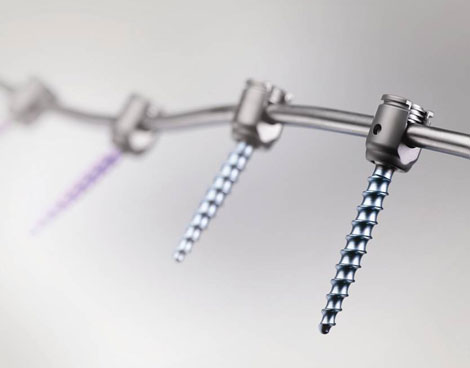
The new company announced on August 2, 2012 that the FDA has given clearance for use of its Expedium, Viper, and Viper2 Spine Systems on patients with adolescent idiopathic scoliosis (AIS), an abnormal curvature of the spine that typically affects children between the ages of 10 and 18. The clearance expands the scoliosis indication for the pedicle screw systems, which now are indicated for both adolescents and adults.
According to the company, the Expedium technology was first introduced in 2004. The Viper and Viper 2 Spine Systems have been used in minimally invasive spine surgery for a wide range of pathologies since 2005 and 2008, respectively.
The new indication clearance, which was received in July, clears the way for the devices to be used in posterior non-cervical pedicle screw fixation in adolescent patients and for the company to provide training and education about its appropriate use.
“AIS is a serious challenge to surgeons, patients, and their families. New treatment options based on proven technologies provide surgeons with more choices to help more patients, ” said Suken Shah, M.D., Spine Surgeon at the Alfred I. duPont Hospital for Children in Wilmington, Delaware. The company noted that Dr. Shah is a paid consultant to DePuy Synthes Spine.
Scoliosis
Scoliosis, according to the company announcement, can lead to chronic back pain and reduced respiratory function and impact quality of life by limiting activity and affecting self-esteem. If the curvature of the spine is between 25 to 45 degrees, back bracing is generally recommended in an attempt to stop curve progression. If the curve progresses beyond 45 degrees, spinal fusion surgery is considered to strengthen and straighten the spine. Most patients do not progress to a degree needing surgical intervention.
According to the National Scoliosis Foundation, scoliosis patients make more than 600, 000 visits to private physician offices, 38, 000 children undergo spinal fusion surgeries and about 30, 000 children are braced each year in the United States.
DePuy Synthes Spine
Perhaps as interesting as the 501(k) clearance announcement, is how the merged DePuy Synthes Spine company describes itself.
The press release said, “DePuy Synthes Spine is one of the largest spine companies in the world dedicated to developing treatments and solutions for the full spectrum of spinal disorders including adult and adolescent deformity, spinal stenosis, trauma and degenerative disc disease. The company provides total solutions that range from devices for minimally invasive and complex spine surgery to procedural solutions that advance patient care. DePuy Synthes Spine is part of DePuy Synthes Companies of Johnson & Johnson which builds upon a legacy of innovation by filling unmet clinical needs and improving patient and economic outcomes across joint reconstruction, trauma, spine, sports medicine, neurological, craniomaxillofacial, power tools and biomaterials.”
The new orthopedic superpower has fired its first spine shot.
Author
React:
Discussion
This is a fascinating development. In my practice we've seen similar outcomes with the revised protocol. The key differentiator seems to be patient selection criteria. Has anyone else noticed the correlation with BMI thresholds?
Great point. I'd push back slightly on the conclusion, the sample size in the cited study is too small to draw population-level inferences. That said, the directional signal is compelling and worth a larger RCT.
We implemented a similar approach last year. Early results are promising but we're still gathering 12-month follow-up data. Happy to share our protocol if anyone is interested.
Join the conversation
Orthopedic professionals are discussing this. Sign in and upgrade to read every comment and add your voice.