
Why orthopedic surgeons do what they do? Yashodamma, age 37, of Bangalore had suffered from rheumatoid arthritis for 18 years and had been bed ridden, in pain, for the last four years. When she went for consultation at Fortis Hospital in Nagarbhavi, joint replacement surgeon Alwin Almeida, M.D., suggested she undergo total knee replacement surgery, according to the July 19 press release.
Why Surgeons Do What They Do
1 min read Premium comments
Secondary
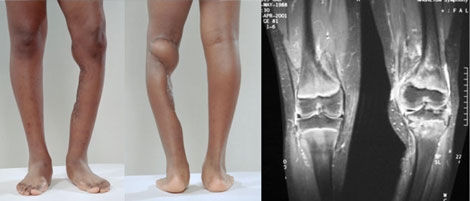
When he examined Yashodamma, Almeida found that she had a badly deformed right knee with 45 degrees of knee bending, 30 degree inward bowing of the leg and extensive bone loss. He explained,
The surgery was technically demanding and needed meticulous planning. The deformity in multiple planes had to be corrected and the loss of bone had to be addressed. The surgery required an extensive release of contracted muscles and soft tissue and clearing up of hardened and deformed bones. The deformities were fully corrected by meticulous surgical correction.
When attendants got Yashodamma on her feet the day after the surgery she was able to put her right foot on the floor for the first time in four years. She said she felt as if God had given her rebirth. “I have not felt this comfortable for over a decade. I feel happy to walk on my own, ” said Yashodamma.
Author
React:
Discussion
This is a fascinating development. In my practice we've seen similar outcomes with the revised protocol. The key differentiator seems to be patient selection criteria. Has anyone else noticed the correlation with BMI thresholds?
Great point. I'd push back slightly on the conclusion, the sample size in the cited study is too small to draw population-level inferences. That said, the directional signal is compelling and worth a larger RCT.
We implemented a similar approach last year. Early results are promising but we're still gathering 12-month follow-up data. Happy to share our protocol if anyone is interested.
Join the conversation
Orthopedic professionals are discussing this. Sign in and upgrade to read every comment and add your voice.